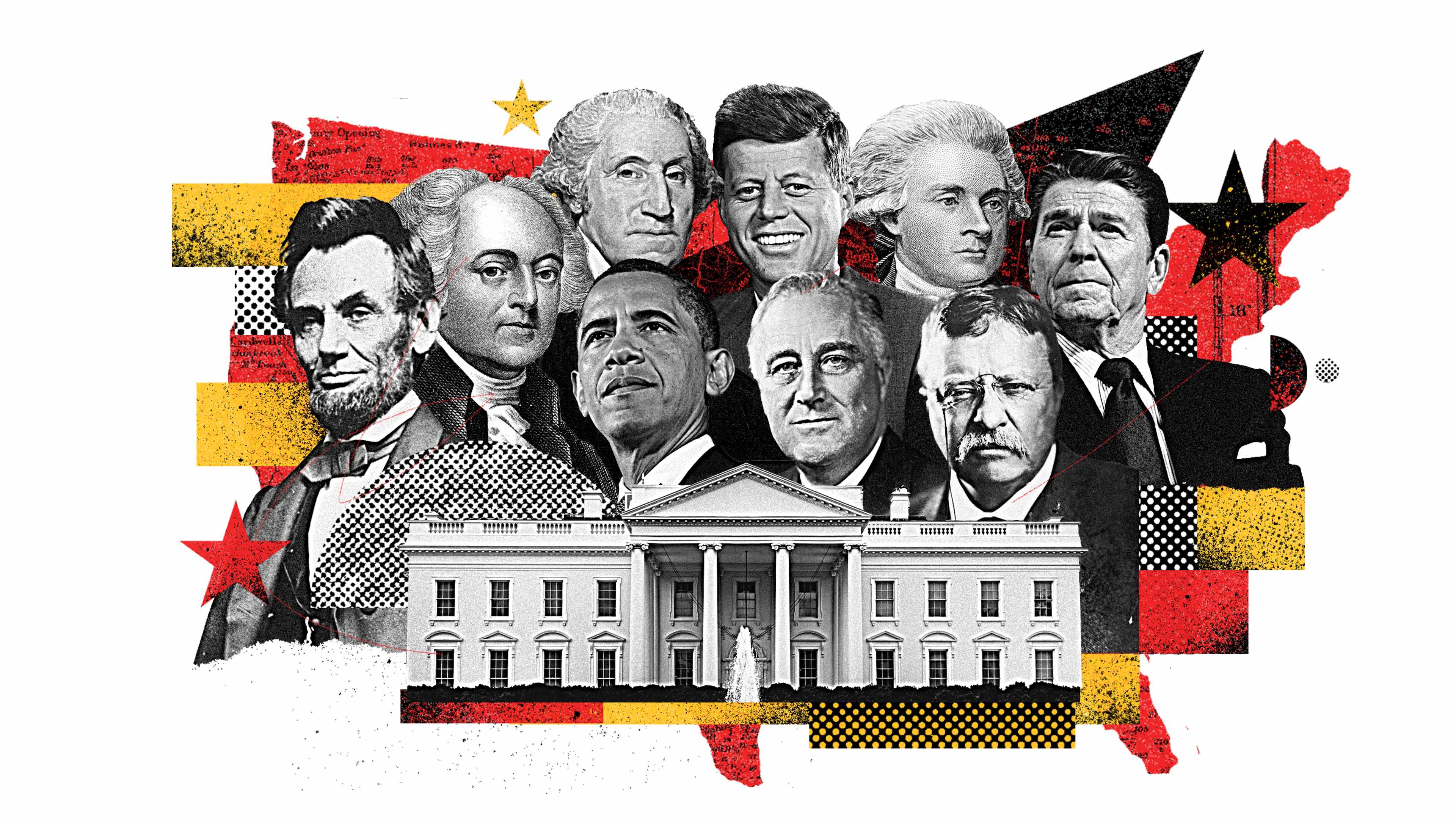
On this day in 1923, Calvin Coolidge is sworn in as the 30th president of the United States, hours after the death of President Warren G. Harding.
Born July 4, 1872, in Plymouth, Vermont, Coolidge was the son of a village storekeeper. He graduated from Amherst College in Massachusetts and worked his way up in the political ranks in that state as a Republican, from city councilman in Northampton in 1898 to governor in 1918. Coolidge made it onto the Republican ticket in 1920 as Harding's running mate, and they won a decisive victory over a Democratic pairing of James Cox and Franklin Delano Roosevelt.
In 1923, Harding's administration was tainted by the emergence of corruption scandals involving Attorney General Harry M. Daugherty and other high government officials, a group known as the Ohio Gang. A distraught Harding sought refuge from Washington during a summer vacation but died suddenly in San Francisco late on August 2, after suffering a heart attack or stroke. Coolidge got the news of Harding's death early the next morning, while visiting family in Vermont. He took the oath of office by the light of a kerosene lamp; his father, a notary public, administered it using the family's Bible.
Coolidge immediately began working to rehabilitate the tarnished image of the government's executive branch, projecting an image of old-fashioned New England values and Puritan austerity that reassured a troubled public. A man of few words—he was known as "Silent Cal"—Coolidge became an extremely popular president, winning more than 54 percent of the popular vote when he was reelected in 1924. His time in the White House coincided with an era of unprecedented material prosperity and technological advances, with consumers snapping up widely available new products such as automobiles, radios and household appliances like vacuum cleaners and washing machines.
Strongly conservative, Coolidge believed the government should do little to interfere with business and industry, whether it was to check the growing power of big corporations or to aid struggling industries such as agriculture. He supported tax cuts for businesses and high tariffs to protect U.S. goods, but vetoed aid to farmers as well as a plan to produce electric power cheaply on the Tennessee River. Taking office just five years after the First World War ended, Coolidge favored isolationism in foreign policy, and opposed American membership in the League of Nations.
Though he almost certainly would have won reelection in 1928, Coolidge decided not to run, retiring from politics before the stock market disaster of November 1929 and the ensuing Great Depression that crippled the country. He died of a heart attack in January 1933. Though remembered fondly for restoring dignity to the White House, the Coolidge era also went down in history as a time of governmental complacency in the face of impending economic disaster.
Also on This Day
- Lead Story
- Nautilus travels under North Pole, 1958
- American Revolution
- Lord Jeffrey Amherst dies, 1797
- Automotive
- "The Spy Who Loved Me" released, features Lotus Esprit, 1977
- Civil War
- Union General Thomas F. Meagher is born in Ireland, 1823
- Cold War
- Chambers accuses Hiss of being a communist spy, 1948
- Crime
- Sodomy arrest sparks controversy, 1982
- Disaster
- Boeing 707 crashes into a mountain near Agadir, Morocco , 1975
- General Interest
- Columbus sets sail, 1492
- Sir Roger Casement hanged, 1916
- Soviets release Mathias Rust, 1988
- Hollywood
- Multimillion-dollar baby photos published, 2008
- Literary
- Last installment of Great Expectations by Charles Dickens is published, 1861
- Music
- "The Macarena" begins its reign atop the U.S. pop charts, 1996
- Old West
- Donner party encounters first delay, 1846
- Presidential
- Calvin Coolidge takes oath of office after Harding's death, 1923
- Sports
- NBA is born, 1949
- Vietnam War
- TV news shows Marines burning village, 1965
- Marines launch Operation Prairie, 1966
- World War I
- Germany and France declare war on each other, 1914
- World War II
- Italians move on British Somaliland, 1940
Calvin Coolidge takes oath of office after Harding's death
Fact Check We strive for accuracy and fairness. But if you see something that doesn't look right, contact us!
This Week in History, Aug 3 - Aug 9
- Aug 03, 1923
- Calvin Coolidge takes oath of office after Harding's death
- Aug 04, 1753
- Washington receives highest Freemason rank
- Aug 05, 1861
- Lincoln imposes first federal income tax
- Aug 06, 1965
- Johnson signs Voting Rights Act
- Aug 07, 1990
- Bush orders Operation Desert Shield
- Aug 08, 1974
- Nixon resigns
- Aug 09, 1974
- Ford is inaugurated
Related Topics
What Happened on Your Birthday?
Pick a DateBio.com
-
On This Day
Read about notable birthdays and celebrity deaths at On This Day.
Shop HISTORY
-
Civil War: Rebellion to Reconstruction DVD Set
Experience the turbulent events that ignited the bloodiest, most divisive war this country has known.
$53.99
Buy Now -
The American Civil War DVD Set
Experience for yourself the historical and personal impact of the Civil War.
$81.99
Buy Now -
The White House: Behind Closed Doors DVD
Learn the secrets of America's most recognizable residence.
$17.77
Buy Now