Morning in America and related media

  • Log out

Morning in America (4:34)

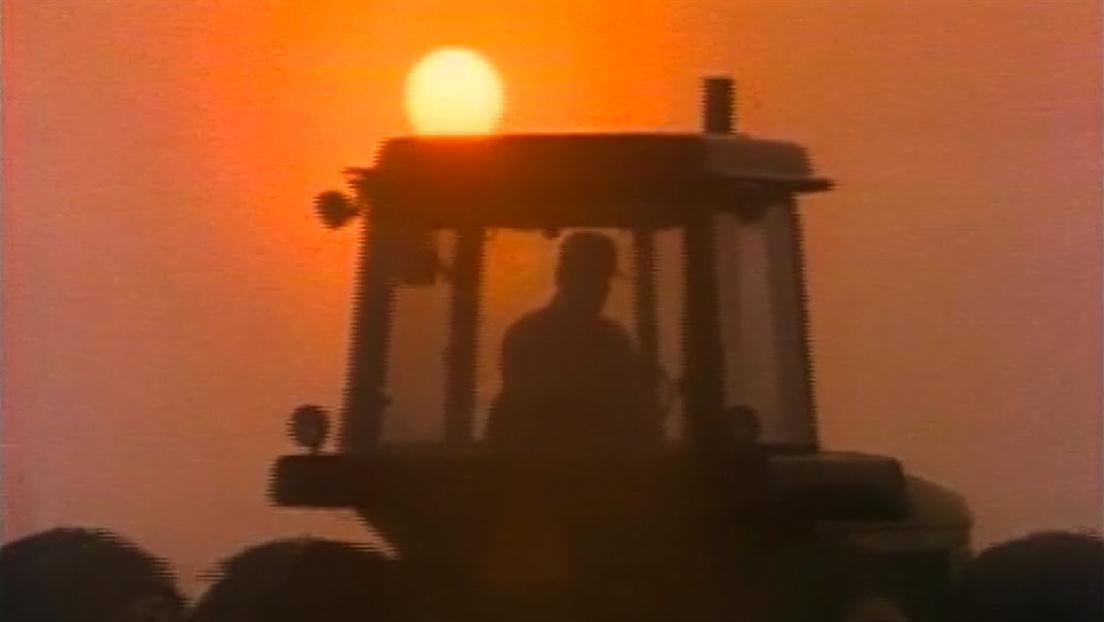
Morning in America was one of the greatest political ad campaigns because it promised a prouder, stronger, better America.


Watch Similar Videos

  • This video can be viewed when you log in with your TV provider.

    Select your TV provider to log in to have full access to videos

    • Select your TV provider
    • See More Providers
    Don't see your TV provider? Learn more

Your Parental Control settings do not allow you to view thiscontent.

Related Videos (10)

  • Morning in America
    Morning in America

    Video Clip (4:34)

    Morning in America was one of the greatest political ad campaigns because it promised a prouder, stronger, better America.
    Video Clip (4:34)
  • Campaign Spot: Best Qualified (1960)
    Campaign Spot: Best Qualified (1960)

    Video Clip (1:01)

    After some misinterpreted comments by President Eisenhower about Nixon that JFK used in a campaign ad against his opponent (Nixons Experience), Eisenhower fully endorses Nixon. But it was too little, too late. JFK won the election, by a slim margin.

    Video Clip (1:01)
  • Campaign Spot: Peace (1976)
    Campaign Spot: Peace (1976)

    Video Clip (0:30)

    Gerald Ford took office after Nixon resigned in 1973. Ford attempted to distance himself from the Nixon presidency, showcasing himself as a normal guy. His campaign focused on an upbeat, positive view of America.

    Video Clip (0:30)
  • Campaign Spot: Southerner Jimmy Carter (1976)
    Campaign Spot: Southerner Jimmy Carter (1976)

    Video Clip (0:49)

    Carter reminds his fellow southerners that there had not been a president from the deep South since 1848, in a radio commercial meant to appeal to the deep South. Ultimately Carter won this region, but Ford got more white southern votes.

    Video Clip (0:49)
  • Campaign Spot: China (1972)
    Campaign Spot: China (1972)

    Video Clip (1:02)

    One of Nixons lasting legacies was his trip to China to normalize relations between the two countries which had been cut off for 20 years. No American president had ever visited China. Nixons tip signaled a major change -- for both America and Chinas policies. And for Republicans, a huge reason to re-elect their candidate.

    Video Clip (1:02)
  • Campaign Spot: Failure (1968)
    Campaign Spot: Failure (1968)

    Video Clip (1:00)

    Similar to Convention, Nixon points out Americas major frustrations and links them to breakdowns in the Democratic leadership.

    Video Clip (1:00)
  • Campaign Spot: Ice Cream (1964)
    Campaign Spot: Ice Cream (1964)

    Video Clip (1:00)

    Another in the series of LBJs spots against Barry Goldwater. Ice Cream first aired on Saturday, September 12, 1964, days after the broadcast of the controversial Peace Little Girl/Daisy ad.

    Video Clip (1:00)
  • Campaign Spot: Ike For President (1952)
    Campaign Spot: Ike For President (1952)

    Video Clip (1:03)

    Up until Eisenhower, presidential candidates used tv for 30-minute speeches only. The idea for the celebrated WWII generals spots came from Madison Avenue ad exec Rossier Reeves, who had created M&Ms Melts in your mouth, not in your hands campaign. Reeves convinced Eisenhower that short spots placed before or after popular tv shows, such as I Love Lucy, would reach more viewers.

    Video Clip (1:03)
  • Campaign Spot: Jimmy Carter's Bio (1976)
    Campaign Spot: Jimmy Carter's Bio (1976)

    Video Clip (4:24)

    Georgia Governor Jimmy Carter was a Washington outsider, a position he stressed during his campaign.

    Video Clip (4:24)
  • Campaign Spot: Kennedy, Kennedy (1960)
    Campaign Spot: Kennedy, Kennedy (1960)

    Video Clip (1:01)

    This 1960 campaign spot makes use of JFK's relative youth and a repetitious jingle.

    Video Clip (1:01)

Related Speeches & Audio (10)

  • George H. W. Bush Refuses More Debates
    George H. W. Bush Refuses More Debates

    Audio Clip (2:04)

    As the 1988 presidential campaign got underway, a debate over debates emerged, with Gov. Michael Dukakis' camp pushing for three and four and Vice President George H. W. Bush standing his ground at two. In an address to the American people, Bush tries to bring the matter to a close.

    Audio Clip (2:04)
  • Reagan’s First Inaugural Address
    Reagan’s First Inaugural Address

    Audio Clip (1:29)

    With the country discouraged by high inflation, unemployment, gas shortages and the Iran hostage crisis, former California governor Ronald Reagan easily defeated incumbent President Jimmy Carter in the 1980 election. In his inaugural address on January 20, 1981, President Reagan promises to limit the reach of the federal government.

    Audio Clip (1:29)
  • Reagan’s Second Inaugural Address
    Reagan’s Second Inaugural Address

    Audio Clip (0:47)

    Defeating Democratic nominee Walter Mondale with an unprecedented electoral vote margin, President Ronald Reagan secured a second term as president of the United States. In his inaugural address on January 21, 1985, Reagan introduces the idea of a "new American emancipation."

    Audio Clip (0:47)
  • Reagan and Mondale in 1984 Presidential Debate
    Reagan and Mondale in 1984 Presidential Debate

    Audio Clip (1:15)

    On October 21, 1984, President Ronald Reagan and former Vice President Walter Mondale engage in their second nationally broadcast debate. When Henry Trewhitt of the Baltimore Sun asks the president about his advancing age, Reagan turns the question on its head by promising not to make an issue of his opponent’s youth and inexperience.

    Audio Clip (1:15)
  • Reagan’s 1984 Presidential Nomination
    Reagan’s 1984 Presidential Nomination

    Audio Clip (0:57)

    On August 23, 1984, President Ronald Reagan accepts his party's nomination for a second term. In his speech at the Republican National Convention, President Reagan promises a "springtime of hope" for America.

    Audio Clip (0:57)
  • The Speech
    The Speech

    Audio Clip (4:42)

    It was the campaign speech that transformed a Hollywood actor into a national political figure. On october 27, 1964 Ronald Reagan delivered "The Speech."

    Audio Clip (4:42)
  • Herbert Hoover Campaigns for Reeelection
    Herbert Hoover Campaigns for Reeelection

    Audio Clip (2:03)

    In his 1932 acceptance speech for the Republican nomination for president, President Herbert Hoover promises to continue his reconstruction efforts if he has a chance at a second term.

    Audio Clip (2:03)
  • Johnson Will Not Seek Reelection
    Johnson Will Not Seek Reelection

    Audio Clip (0:38)

    Facing a country sharply divided over the Vietnam War, President Lyndon B. Johnson announces in a national television and radio broadcast on March 31, 1968, that he will not seek reelection to the presidency.

    Audio Clip (0:38)
  • First Lady Betty Ford Delivers President Ford's Concession
    First Lady Betty Ford Delivers President Ford's Concession

    Audio Clip (0:58)

    In November 1976, President Gerald Ford was defeated in his re-election campaign by challenger Jimmy Carter. Because Ford was hoarse from campaigning, First Lady Betty Ford speaks on his behalf, informing the nation that the president officially conceded and offered his congratulations to the new president-elect.

    Audio Clip (0:58)
  • Thomas E. Dewey Speaks on Election Eve
    Thomas E. Dewey Speaks on Election Eve

    Audio Clip (1:08)

    In his race against President Franklin D. Roosevelt, Republican candidate Gov. Thomas E. Dewey dwells on America's ills in a speech given on November 6, 1944.

    Audio Clip (1:08)

Shop HISTORY