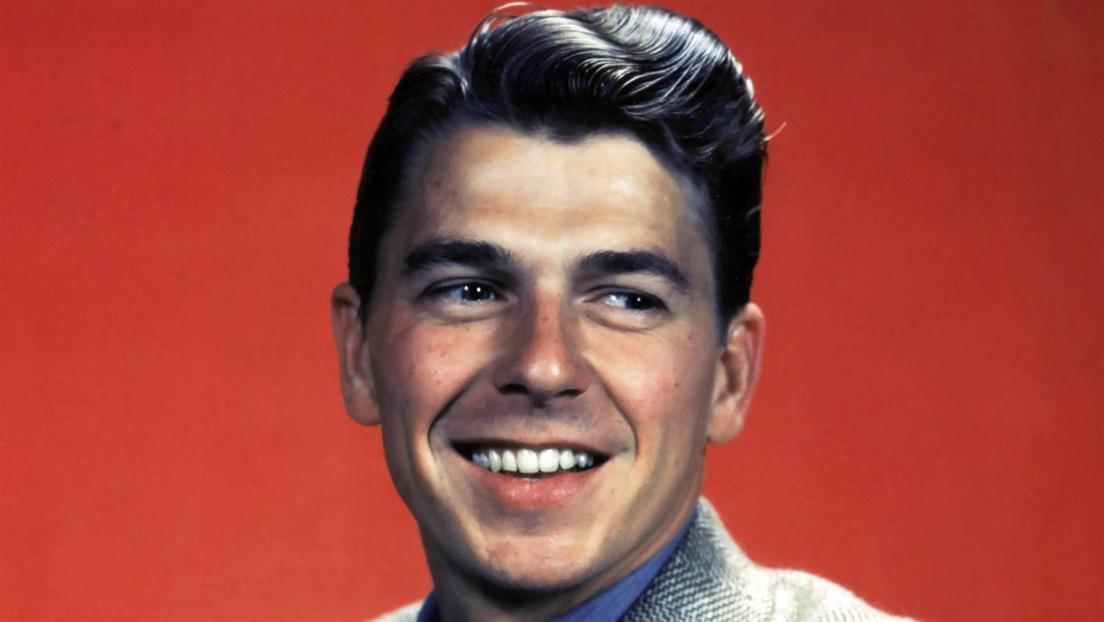
The Speech and related media

  • Log out

The Speech (4:18)

Ronald Reagan's speech in October 1964 inspired a new generation of conservative Americans.

Watch Similar Videos

Visit our Store to own Reagan on DVD!

  • This video can be viewed when you log in with your TV provider.

    Select your TV provider to log in to have full access to videos

    • Select your TV provider
    • See More Providers
    Don't see your TV provider? Learn more

Your Parental Control settings do not allow you to view thiscontent.

Related Videos (10)

  • The Speech
    The Speech

    Video Clip (4:18)

    Ronald Reagan's speech in October 1964 inspired a new generation of conservative Americans.

    Video Clip (4:18)
  • Read My Lips
    Read My Lips

    Video Clip (4:31)

    "Read my lips no new taxes" was the 1988 campaign promise by George Bush that helped boost his popularity with the conservative wing.

    Video Clip (4:31)
  • There You Go Again
    There You Go Again

    Video Clip (5:13)

    Jimmy Carter unsuccessfully attempts to play into the uncertainty that the American public had for Ronald Reagan, during a debate on October 28, 1980.

    Video Clip (5:13)
  • The Daisy Ad
    The Daisy Ad

    Video Clip (3:02)

    The Daisy Ad, run for the first and last time on September 7th, 1964, but its impact was immeasurable. Political advertising was never the same.

    Video Clip (3:02)
  • The Checkers Speech
    The Checkers Speech

    Video Clip (3:34)

    On September 23, 1952 Richard Nixon, mired in a scandal involving bribary and campaign funds, went on television and saved his political career.

    Video Clip (3:34)
  • Campaign Spot: Convention (1968)
    Campaign Spot: Convention (1968)

    Video Clip (0:55)

    For his second run for the presidency, Nixon hired filmmaker Eugene Jones to produce ads that captured the turbulence and unrest in the nation at the time. Convention was one in a series -- mimicking the uneasy mood and tension in the US, suggesting that Nixon was the only man to bring the country together again.

    Video Clip (0:55)
  • Campaign Spot: Failure (1968)
    Campaign Spot: Failure (1968)

    Video Clip (1:00)

    Similar to Convention, Nixon points out Americas major frustrations and links them to breakdowns in the Democratic leadership.

    Video Clip (1:00)
  • Campaign Spot: Peace Little Girl (1964)
    Campaign Spot: Peace Little Girl (1964)

    Video Clip (1:00)

    The Daisy ad, one of the most famous political ads of all time, aired only once, but was replayed on the news and elsewhere throughout LBJs campaign. The ad, which implies that a Goldwater presidency could lead to nuclear war, is believed to have played a major role in Johnsons defeat of his opponent.

    Video Clip (1:00)
  • Ask Steve: Southern Strategy
    Ask Steve: Southern Strategy

    Video Clip (1:23)

    In this video clip from Ask Steve, the Southern Strategy is explained. It was the republican party's successful plan of getting the white southern population to shift their views from democratic to republican.

    Video Clip (1:23)
  • Nixon's Secret Plan to End the Vietnam War
    Nixon's Secret Plan to End the Vietnam War

    Video Clip (3:36)

    In 1968, Richard Nixon ran on a platform for presidency that included a "secret plan" to end the war in Vietnam.

    Video Clip (3:36)

Related Speeches & Audio (10)

  • The Speech
    The Speech

    Audio Clip (4:42)

    It was the campaign speech that transformed a Hollywood actor into a national political figure. On october 27, 1964 Ronald Reagan delivered "The Speech."

    Audio Clip (4:42)
  • Herbert Hoover Campaigns for Reeelection
    Herbert Hoover Campaigns for Reeelection

    Audio Clip (2:03)

    In his 1932 acceptance speech for the Republican nomination for president, President Herbert Hoover promises to continue his reconstruction efforts if he has a chance at a second term.

    Audio Clip (2:03)
  • Lyndon Johnson's Inaugural Address
    Lyndon Johnson's Inaugural Address

    Audio Clip (2:02)

    On January 20, 1965, Lyndon B. Johnson began his first elected term as president of the United States. In his inaugural address, Johnson calls for the nation to unite toward a common goal.

    Audio Clip (2:02)
  • Johnson Will Not Seek Reelection
    Johnson Will Not Seek Reelection

    Audio Clip (0:38)

    Facing a country sharply divided over the Vietnam War, President Lyndon B. Johnson announces in a national television and radio broadcast on March 31, 1968, that he will not seek reelection to the presidency.

    Audio Clip (0:38)
  • Nixon Wins Presidency
    Nixon Wins Presidency

    Audio Clip (0:39)

    Audio Clip (0:39)
  • Nixon Concedes Defeat in 1962 Governor's Race
    Nixon Concedes Defeat in 1962 Governor's Race

    Audio Clip (16:18)

    Nixon was defeated by Edmund Brown California's gubernatorial seat. He conceded defeat in one of the most bitter speeches of his political career.

    Audio Clip (16:18)
  • Nixon Declines Candidacy in 1964
    Nixon Declines Candidacy in 1964

    Audio Clip (0:49)

    On July 13, 1964, the Republican Party convened at the National Convention in San Francisco to nominate their candidates for the presidency and vice presidency. Though he had flirted with the idea of running for president during the pre-primary period, Richard Nixon makes it clear in his speech that he has decided not to seek a nomination.

    Audio Clip (0:49)
  • Reagan Endorses Barry Goldwater
    Reagan Endorses Barry Goldwater

    Audio Clip (0:58)

    When Ronald Reagan, as spokesperson for General Electric, gives his “Time for Choosing” speech in support of Barry Goldwater’s 1964 presidential run, he establishes himself as an important player in the Republican Party and jumpstarts his political career.

    Audio Clip (0:58)
  • Nixon’s First Inaugural Address
    Nixon’s First Inaugural Address

    Audio Clip (1:13)

    After losing his first presidential bid to John F. Kennedy in 1960, former Vice President Richard Nixon brought the Republican Party back into power with a win in the 1968 presidential election. On January 20, 1969, he takes the oath of office and promises to heal a divided nation.

    Audio Clip (1:13)
  • Lyndon Johnson and Robert Kennedy Discuss Election Night Results
    Lyndon Johnson and Robert Kennedy Discuss Election Night Results

    Audio Clip (2:56)

    In a recorded telephone conversation on November 3, 1964, President Lyndon B. Johnson discusses that night's election results with Robert F. Kennedy, who has just won his Senate race in New York. Johnson speculates about the outcome of his presidential race and asks Kennedy to offer congratulations to his brother Edward for his Senate win in Massachusetts.

    Audio Clip (2:56)

Shop HISTORY