Ancient Americas
Ancient North, South and Central America was home to sophisticated civilizations such as the Olmec, Maya and Aztec societies. The region hosts mysterious ruins like Chichen Itza, Teotihuacan, Serpent Mound, Tikal and the Nazca Lines.

Start Here

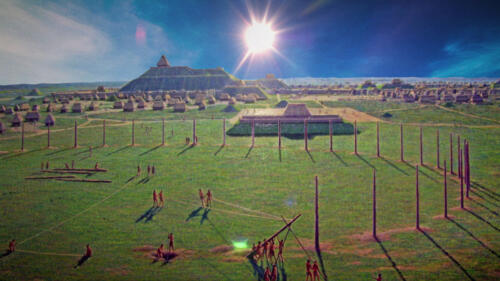
Caral was an architectural marvel—a 1,500-acre complex constructed by the oldest known civilization in the Western Hemisphere.

Three city-states joined in a fragile, but strategic alliance to wield tremendous power as the Aztec Empire.

Around A.D. 250, the Maya built flourishing cities. What triggered their decline?

These dietary staples were cultivated over thousands of years by Indigenous peoples of America.
Mayan Astronomy
Mayan Astronomy
Ancient Mayans studied the skies thousands of years before modern astronomical observatories.

3 Key Empires

Olmec
Beginning around 1500 B.C., the Olmec civilization established itself in the present-day Mexican states of Veracruz and Tabasco, reaching its cultural and economic peak around 500 B.C. The Olmecs were noted for their superb stone carvings.


Explore All Related Topics

These ancient landmarks offer insight into the civilizations of North and South America.

Teotihuacan is an ancient Mesoamerican city famed for its pyramids. This area of modern-day Mexico was settled as early as 400 B.C. and named by the Aztecs.

Pumapunku is one of South America’s most intriguing archaeological sites.

Caral was an architectural marvel—a 1,500-acre complex constructed by the oldest known civilization in the Western Hemisphere.

Deep beneath Belize, a mysterious skeleton offers clues to ancient Maya ritual and sacrifice.

Machu Picchu, an archeological site in the Andes Mountains of Peru, is believed to have been built in the 15th century as a royal estate for Incan leaders.

The ancient world was home to these long-lost species. One was even buried in a royal tomb.

Inked-up mummies reveal that, far from a modern phenomenon, humans have been getting tattoos for thousands of years.

The giant statues of Rapa Nui inspired a legend of civilization collapse. The truth might be one of societal endurance.

The history of chocolate and its creation from cocoa beans can be traced from the xocolatl-loving Olmec, Maya and Aztecs of Mexico to the courts of Europe.

Maze-like passageways hold secrets in the heart of the ancient Inca Empire.

Humans around the world have been shaping heads for millennia.

The shape-shifting 'water monster' was a powerful symbol in Aztec mythology.

Was it meant to mimic sounds of sacred winds or screams?


