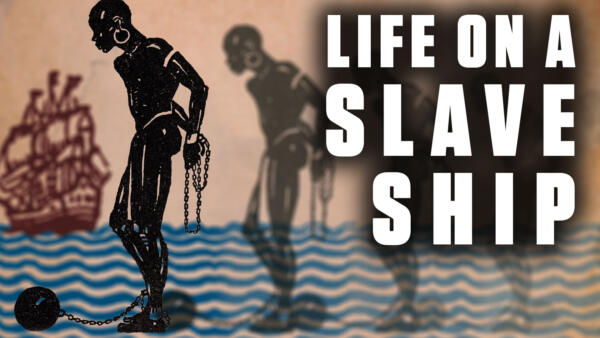
Slavery in America

Slavery in America began when the first African slaves were brought to the North American colony of Jamestown, Virginia, in 1619, to aid in the production of such lucrative crops as tobacco. Slavery was practiced throughout the American colonies in the 17th and 18th centuries, and African-American slaves helped build the economic foundations of the new nation. The invention of the cotton gin in 1793 solidified the central importance of slavery to the South's economy. By the mid-19th century, America's westward expansion, along with a growing abolition movement in the North, would provoke a great debate over slavery that would tear the nation apart in the bloody American Civil War (1861-65). Though the Union victory freed the nation's 4 million slaves, the legacy of slavery continued to influence American history, from the tumultuous years of Reconstruction (1865-77) to the civil rights movement that emerged in the 1960s, a century after emancipation.

This Day in History

May 18

Recommended Articles

  • American Civil War

    American Civil War

    The American Civil War, fueled by the debate over slavery and states' rights, pitted North against South in the costliest conflict fought on U.S. soil.

  • Abolitionist Movement

    Abolitionist Movement

    From the 1830s until 1870, the abolitionist movement attempted to achieve immediate emancipation of all slaves and the ending of racial segregation and discrimination.

  • Abraham Lincoln

    Abraham Lincoln

    The 16th president of the United States, Abraham Lincoln led the Union to victory in the Civil War and emancipated the South's African-American slaves.

  • Reconstruction

    Reconstruction

    Reconstruction refers to the period of upheaval in the American South after the Civil War and abolition of slavery.

Did You Know?

One of the first martyrs to the cause of American patriotism was Crispus Attucks, a former slave who was killed by British soldiers during the Boston Massacre of 1770. Some 5,000 black soldiers and sailors fought on the American side during the Revolutionary War.

Contents

Foundations of Slavery in America

In the early 17th century, European settlers in North America turned to African slaves as a cheaper, more plentiful labor source than indentured servants (who were mostly poorer Europeans). After 1619, when a Dutch ship brought 20 Africans ashore at the British colony of Jamestown, Virginia, slavery spread throughout the American colonies. Though it is impossible to give accurate figures, some historians have estimated that 6 to 7 million slaves were imported to the New World during the 18th century alone, depriving the African continent of some of its healthiest and ablest men and women.

In the 17th and 18th centuries, black slaves worked mainly on the tobacco, rice and indigo plantations of the southern coast. After the American Revolution (1775-83), many colonists (particularly in the North, where slavery was relatively unimportant to the economy) began to link the oppression of black slaves to their own oppression by the British, and to call for slavery's abolition. After the war's end, however, the new U.S. Constitution tacitly acknowledged the institution, counting each slave as three-fifths of a person for the purposes of taxation and representation in Congress and guaranteeing the right to repossess any "person held to service or labor" (an obvious euphemism for slavery).

Importance of the Cotton Gin

In the late 18th century, with the land used to grow tobacco nearly exhausted, the South faced an economic crisis, and the continued growth of slavery in America seemed in doubt. Around the same time, the mechanization of the textile industry in England led to a huge demand for American cotton, a southern crop whose production was unfortunately limited by the difficulty of removing the seeds from raw cotton fibers by hand. In 1793, a young Yankee schoolteacher named Eli Whitney invented the cotton gin, a simple mechanized device that efficiently removed the seeds. His device was widely copied, and within a few years the South would transition from the large-scale production of tobacco to that of cotton, a switch that reinforced the region's dependence on slave labor.

Slavery itself was never widespread in the North, though many of the region's businessmen grew rich on the slave trade and investments in southern plantations. Between 1774 and 1804, all of the northern states abolished slavery, but the so-called "peculiar institution" remained absolutely vital to the South. Though the U.S. Congress outlawed the African slave trade in 1808, the domestic trade flourished, and the slave population in the U.S. nearly tripled over the next 50 years. By 1860 it had reached nearly 4 million, with more than half living in the cotton-producing states of the South.

Slaves and Slaveholders

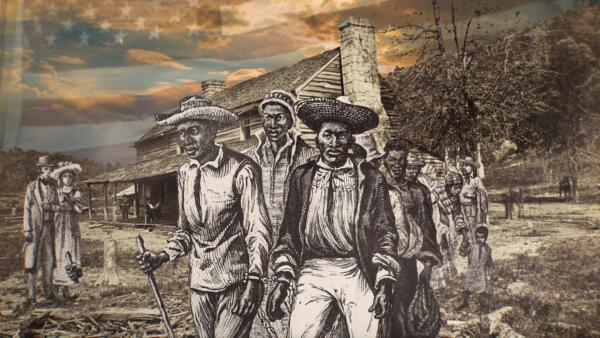
Slaves in the antebellum South constituted about one-third of the southern population. Most slaves lived on large farms or small plantations; many masters owned less than 50 slaves. Slave owners sought to make their slaves completely dependent on them, and a system of restrictive codes governed life among slaves. They were prohibited from learning to read and write, and their behavior and movement was restricted. Many masters took sexual liberties with slave women, and rewarded obedient slave behavior with favors, while rebellious slaves were brutally punished. A strict hierarchy among slaves (from privileged house slaves and skilled artisans down to lowly field hands) helped keep them divided and less likely to organize against their masters. Slave marriages had no legal basis, but slaves did marry and raise large families; most slave owners encouraged this practice, but nonetheless did not hesitate to divide slave families by sale or removal.

Slave revolts did occur within the system (notably ones led by Gabriel Prosser in Richmond in 1800 and by Denmark Vesey in Charleston in 1822), but few were successful. The slave revolt that most terrified white slaveholders was that led by Nat Turner in Southampton County, Virginia, in August 1931. Turner's group, which eventually numbered around 75 blacks, murdered some 60 whites in two days before armed resistance from local whites and the arrival of state militia forces overwhelmed them. Supporters of slavery pointed to Turner's rebellion as evidence that blacks were inherently inferior barbarians requiring an institution such as slavery to discipline them, and fears of similar insurrections led many southern states to further strengthen their slave codes in order to limit the education, movement and assembly of slaves. In the North, the increased repression of southern blacks would only fan the flames of the growing abolition movement.

Fact Check We strive for accuracy and fairness. But if you see something that doesn't look right, contact us!

Advertisement

Shop HISTORY