Videos | Audio | Photos | Interactives

  • Log out

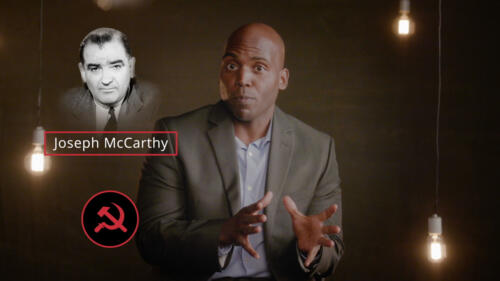
Cold War (2:31)

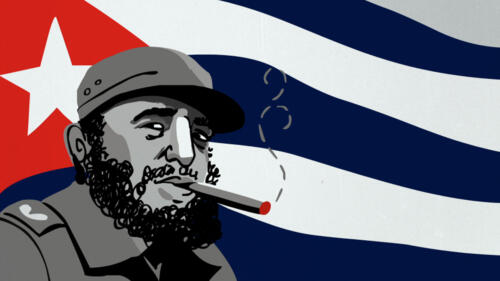
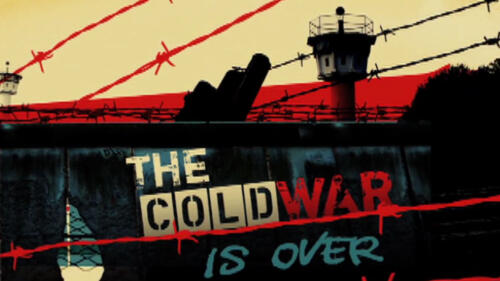
The Cold War is over, but what it left behind may surprise you.

Watch Similar Videos

Duck & Cover: The Cold War DVD

Visit Our Store to own Duck & Cover: The Cold War on DVD!

  • This video can be viewed when you log in with your TV provider.

    Select your TV provider to log in to have full access to videos

    • Select your TV provider
    • See More Providers
    Don't see your TV provider? Learn more

Your Parental Control settings do not allow you to view thiscontent.

Videos (27)

  • Cold War
    Cold War

    Video Clip (2:31)

    The Cold War is over, but what it left behind may surprise you.

    Video Clip (2:31)
  • Deconstructing History: Berlin Wall
    Deconstructing History: Berlin Wall

    Video Clip (2:27)

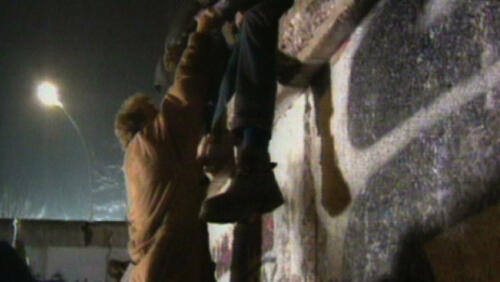
    For 30 years, the Berlin Wall was the defining symbol of the Cold War, separating families and keeping the people from jobs and opportunity in the west.

    Video Clip (2:27)
  • Cuban Missile Crisis
    Cuban Missile Crisis

    Video Clip (2:22)

    Get the story of the dramatic face-off that nearly ended in nuclear war, as told by musician and artist Jeffrey Lewis.

    Video Clip (2:22)
  • Manhattan Project
    Manhattan Project

    Video Clip (3:09)

    Explore the top-secret American project to build the world's first atomic bomb.

    Video Clip (3:09)
  • JFK: A New Generation
    JFK: A New Generation

    Video Clip (3:57)

    John F. Kennedy's progressive agenda during the 1960s inspired a new generation of optimism in America.

    Video Clip (3:57)
  • The Space Race
    The Space Race

    Video Clip (2:58)

    The U.S. competition with the U.S.S.R. for technological dominance spurred the U.S. on to the first-ever landing on the Moon.

    Video Clip (2:58)
  • The Great Communicator
    The Great Communicator

    Video Clip (4:18)

    Ronald Reagan galvanized the American public through his famous speeches that helped redefine American politics in the 1980s.

    Video Clip (4:18)
  • Vietnam
    Vietnam

    Video Clip (1:42)

    Whether they volunteered or were drafted, 1 out of 10 soldiers did not survive Vietnam.

    Video Clip (1:42)
  • Ask Steve: The Space Program
    Ask Steve: The Space Program

    Video Clip (1:34)

    In this video clip from Ask Steve, the reason for Americans interest in the Space Program was explored. It is explained that competition, and the technological wonder of the space race were some of the reasons for the Americans interest.

    Video Clip (1:34)
  • The Road to War
    The Road to War

    Video Clip (2:40)

    Over 25 years, the Vietnam conflict escalated from an attempt to stop the spread of communism into a full-scale war.

    Video Clip (2:40)
  • Satellites: Invention of War
    Satellites: Invention of War

    Video Clip (2:53)

    Sputnik was the first satellite to orbit Earth, but satellites that produced changes in the way we explore our planet came from American optics. Find out more.

    Video Clip (2:53)
  • Gerald Ford: Cold War vs. War on Terror
    Gerald Ford: Cold War vs. War on Terror

    Video Clip (2:08)

    Watch this interview clip of former U.S. President, Gerald Ford, about his views on war and President Bush. He claims President Bush has many more difficult decisions to make than he did while he was in office.

    Video Clip (2:08)
  • Joseph Stalin
    Joseph Stalin

    Video Clip (2:20)

    For nearly 30 years, the Soviet Union is controlled by this ruthless tyrant, who sends millions to their death.

    Video Clip (2:20)
  • Soviet Submarine Bases
    Soviet Submarine Bases

    Video Clip (2:08)

    Don Wildman explores a former submarine maintainence and weapons factory utilized during the Cold War.

    Video Clip (2:08)
  • Space: JFK's New Frontier
    Space: JFK's New Frontier

    Video Clip (3:55)

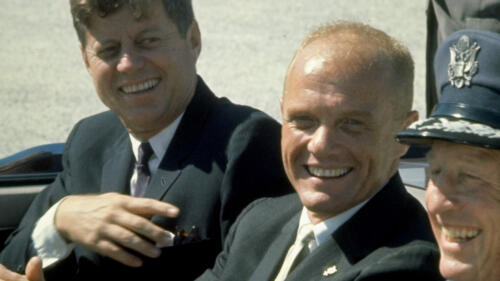
    On February 20, 1962, Colonel John Glenn became the first human to orbit the earth, launching the manned space program.

    Video Clip (3:55)
  • Space Race: Cold War Front
    Space Race: Cold War Front

    Video Clip (4:21)

    A brief look at the Space Race, set to "Magic Carpet Ride" by Steppenwolf.

    Video Clip (4:21)
  • Cities of the Underworld 3: Stalin's Communications Bunker
    Cities of the Underworld 3: Stalin's Communications Bunker

    Video Clip (2:20)

    Don Wildman shows us a top secret military bunker built under Stalin's orders in 1952.

    Video Clip (2:20)
  • JFK Sets Goal for Man on Moon
    JFK Sets Goal for Man on Moon

    Video Clip (1:56)

    John F. Kennedy's sets the goal of the United States to land a man on the moon and return him safely to Earth.

    Video Clip (1:56)
  • Donald Devore
    Donald Devore

    Video Clip (3:22)

    in the summer of 1968, Donald Devore was drafted and sent off to basic training. Devore was assigned to an artillery unit in Vietnam and after four months, was granted leave to attend the birth of his first child.

    Video Clip (3:22)
  • Nixon: Communism within the U.S.
    Nixon: Communism within the U.S.

    Video Clip (1:38)

    The Cold War was a serious issue that engulfed the United States. Coupled with this war was the fear of communism in the United States. This fear became a central issue between Kennedy and Nixon. Hear their debate in this History Channel video.

    Video Clip (1:38)
  • Kennedy: Communism within the U.S.
    Kennedy: Communism within the U.S.

    Video Clip (0:50)

    Senator John F. Kennedy talks about the internal threat that communism poses to national security. Kennedy describes that these internal factions are serious and should be taken care of by supporting laws that the U.S. has already passed.

    Video Clip (0:50)
  • Barry Romo
    Barry Romo

    Video Clip (3:24)

    Fresh out of high school, Barry Romo enlisted in the U.S. Army to serve in Vietnam. Romo was awarded a bronze star for his efforts but grew disillusioned with the war and later joined a controversial group called Vietnam Veterans Against the War.

    Video Clip (3:24)
  • Arthur Wiknik
    Arthur Wiknik

    Video Clip (3:42)

    As an 18-year-old draftee, Arthur Wiknik was rushed through officer candidate's school. After one month in Vietnam he found himself in the middle of the battle of "Hamburger Hill"--one of the most notorious battles of the war.

    Video Clip (3:42)
  • Kennedy Responds to Berlin Wall
    Kennedy Responds to Berlin Wall

    Video Clip (3:05)

    President Kennedy's diplomatic resolve was tested as tension mounted at the Berlin wall.

    Video Clip (3:05)
  • Reagan Meets Gorbachev
    Reagan Meets Gorbachev

    Video Clip (4:46)

    See President Ronald Reagan meet Mikail Gorbachev, set to "Cult of Personality" by Living Colour.

    Video Clip (4:46)
  • Bob Clewell
    Bob Clewell

    Video Clip (3:35)

    Bob Clewell dropped out of college to join the Army, and arrive in Vietnam just weeks after the Gulf of Tonkin incident in 1964. During his third tour, he was trained as a helicopter pilot, providing air support for ground troops during the Lam Son 719 offensive.

    Video Clip (3:35)
  • History Rewind: Chimp In Space
    History Rewind: Chimp In Space

    Video Clip (1:53)

    Rewind Breaking News The History Channel: This is the story of Ham, the first hominid to be launched into space. Ham the chimp is launched from Cape Canaveral, Florida in a Project Mercury Redstone rocket.

    Video Clip (1:53)

Photo Galleries (1)

  • Cold War: American Leaders
    Cold War: American Leaders

    13 Photos

    From 1945 until the fall of the Soviet Union in 1991, U.S. presidents and politicians developed strategies to limit the spread of communism.

    (13 Photos)

Speeches & Audio (27)

  • The Truman Doctrine
    The Truman Doctrine

    Audio Clip (1:50)

    On March 12, 1947, President Harry Truman urges a joint session of Congress to support his doctrine, which calls for U.S. financial and military aid to Greece and Turkey in an effort to protect the countries from Soviet domination.

    Audio Clip (1:50)
  • Castro Assumes Power in Cuba
    Castro Assumes Power in Cuba

    Audio Clip (0:35)

    An August 3, 1959, broadcast from Havana, Cuba, covers the celebration following the overthrow of the Batista regime and the installation of its new leader, Fidel Castro.

    Audio Clip (0:35)
  • Execution of Julius and Ethel Rosenberg
    Execution of Julius and Ethel Rosenberg

    Audio Clip (2:48)

    Broadcast just 15 minutes before the execution of Julius and Ethel Rosenberg on June 19, 1953, a news report recounts the last-minute U.S. Supreme Court decision overturning a stay of execution for the pair. The Rosenbergs were the first U.S. citizens to be executed for espionage after their conviction for transmitting atomic bomb secrets to the Soviet Union.

    Audio Clip (2:48)
  • Francis Gary Powers Makes Final Plea Before Moscow Court
    Francis Gary Powers Makes Final Plea Before Moscow Court

    Audio Clip (0:38)

    Radio Moscow broadcasts the confession of captured American U-2 spy plane pilot Francis Gary Powers, who had been shot down over central Russia on May 1, 1960, and arrested by Soviet authorities.

    Audio Clip (0:38)
  • Francis Gary Powers on Release From Soviets
    Francis Gary Powers on Release From Soviets

    Audio Clip (1:19)

    After his return to the United States, American U-2 spy plane pilot Francis Gary Powers is questioned by the media about his capture and subsequent hearing before the Senate Armed Services Select Committee on March 6, 1962. Powers had been shot down over central Russia on May 1, 1960, and arrested by Soviet authorities. Two years later, he was released by the Soviets in a spy exchange with the United States.

    Audio Clip (1:19)
  • The Hollywood 10 Placed on Blacklist
    The Hollywood 10 Placed on Blacklist

    Audio Clip (1:40)

    A New York report describes the fate of the 10 movie directors and writers who appeared before the House Un-American Activities Committee in October 1947 and refused to answer questions regarding their suspected communist affiliations.

    Audio Clip (1:40)
  • The Kitchen Debate
    The Kitchen Debate

    Audio Clip (7:24)

    In July 1959, Vice President Richard Nixon traveled to Moscow to open the U.S. Trade and Cultural Fair in Sokolniki Park. In the kitchen of the exhibit's model house built by General Electric, Nixon and Soviet Premier Nikita Khrushchev began an impromptu series of debates on the merits of capitalism and communism. An audio segment of one of the exchanges, which was filmed by the American company Ampex on the first videotape recorder, illustrates the Cold War tensions simmering beneath the surface.

    Audio Clip (7:24)
  • Eisenhower Welcomes Khrushchev to the U.S.
    Eisenhower Welcomes Khrushchev to the U.S.

    Audio Clip (1:38)

    On September 15, 1959, Soviet Premier Nikita Khrushchev, promising an open heart and good intentions, began an unprecedented tour of the United States. President Eisenhower expresses his hopes upon Khrushchev's arrival for improved relations between the two superpowers.

    Audio Clip (1:38)
  • Eisenhower Returns From Cancelled Summit Meeting
    Eisenhower Returns From Cancelled Summit Meeting

    Audio Clip (4:19)

    On May 1, 1960, an American U-2 high-altitude reconnaissance aircraft was shot down over central Russia. As a result, the Paris Summit Conference, scheduled 13 days later, collapsed. Upon his return from the failed conference on May 20, President Eisenhower addresses the welcoming crowd at Andrews Air Force Base.

    Audio Clip (4:19)
  • Radio Budapest Reports on the Soviet Invasion of Hungary
    Radio Budapest Reports on the Soviet Invasion of Hungary

    Audio Clip (0:55)

    On November 4, 1963, the Soviets launched an attack to quell the Hungarian Revolution, which began on October 23. A Radio Budapest correspondent reads a statement delivered earlier by Hungarian Premier Imre Nagy charging the Soviets with attempting to overthrow Hungary's "lawful democratic government."

    Audio Clip (0:55)
  • U.S. Receives News of Soviet Invasion of Czechoslovakia
    U.S. Receives News of Soviet Invasion of Czechoslovakia

    Audio Clip (0:49)

    An August 22, 1968, a U.S. Democratic Platform hearing is interrupted when Chairman Hale Boggs is handed a bulletin announcing the Soviets' invasion of Czechoslovakia. Rep. Boggs reads the news and Secretary of State Dean Rusk makes a hasty departure to find out what's going on.

    Audio Clip (0:49)
  • U.S. Forces Enter Czechoslovakia
    U.S. Forces Enter Czechoslovakia

    Audio Clip (1:50)

    A war correspondent reports on the conditions in Czechoslovakia when Gen. George S. Patton's Third Army entered the Sudetenland region in April 1945.

    Audio Clip (1:50)
  • Czech Ambassador to U.S. Resigns
    Czech Ambassador to U.S. Resigns

    Audio Clip (0:34)

    Czechoslovakia came under communist influence when communist groups led resistance against German occupation during World War II. In 1945, the country was liberated by Soviet forces, which took an active role in Czechoslovakia's postwar politics.

    Audio Clip (0:34)
  • Army-McCarthy Hearings
    Army-McCarthy Hearings

    Audio Clip (1:02)

    On June 9, 1954, two-thirds of the way into the 36-day televised Army-McCarthy hearings in which Sen. Joseph McCarthy argued that the U.S. Army was harboring communists, the investigation hits a turning point. When Joseph Welch, the Army's special counsel, accuses McCarthy of having "no sense of decency," the tide of public opinion turns and McCarthy's career is eventually ruined.

    Audio Clip (1:02)
  • Eisenhower Weighs Chance for Peace in the Cold War
    Eisenhower Weighs Chance for Peace in the Cold War

    Audio Clip (3:40)

    On April 16, 1953, after the death of Russian Premier Joseph Stalin, President Dwight D. Eisenhower delivers what is known as his “Cross of Iron” speech before the American Society for Newspaper Editors, contrasting the philosophies of the Soviet Union and the United States.

    Audio Clip (3:40)
  • Eisenhower's Farewell Address
    Eisenhower's Farewell Address

    Audio Clip (9:56)

    On January 17, 1961, in a national broadcast, Dwight D. Eisenhower speaks to the American people for the last time as president and famously warns about the growing influence of the "military-industrial complex."

    Audio Clip (9:56)
  • Kennedy Speaks Before Meeting Khrushchev
    Kennedy Speaks Before Meeting Khrushchev

    Audio Clip (1:09)

    At a May 31, 1961, Paris press conference, President John F. Kennedy describes his principal aim for meeting with Soviet leader Nikita Khrushchev at the Geneva summit, the first between the two superpowers since 1960.

    Audio Clip (1:09)
  • Mikhail Gorbachev Arrives in U.S.
    Mikhail Gorbachev Arrives in U.S.

    Audio Clip (3:57)

    In December 1988, Soviet leader Mikhail Gorbachev traveled to New York City to deliver his now-famous United Nations speech announcing unilateral arms cuts. Upon his arrival, Gorbachev speaks to the press about his upcoming plans to address the U.N. and to meet with outgoing President Ronald Reagan and President-elect George Bush.

    Audio Clip (3:57)
  • Ping-Pong Diplomacy in China
    Ping-Pong Diplomacy in China

    Audio Clip (1:21)

    In April 1971, China unexpectedly invited the American ping-pong team to compete in Beijing. The invitation to the Americans, the first since the communist takeover in 1949, signaled the possibility of improved U.S.-China relations. NBC News reports on the outcome of the match and the upcoming travels in China awaiting the American athletes.

    Audio Clip (1:21)
  • Tito Visits the United States
    Tito Visits the United States

    Audio Clip (0:19)

    Yugoslavia's President Joseph Broz Tito, makes his first visit to the United States in October 1963. He expresses his gratitude to Americans for their welcoming greetings.

    Audio Clip (0:19)
  • U.S. Boycotts 1980 Moscow Olympics
    U.S. Boycotts 1980 Moscow Olympics

    Audio Clip (1:46)

    In protest against the Soviet invasion of Afghanistan, President Jimmy Carter decided that the United States would not participate in the 1980 Summer Olympics in Moscow. In a news report, the would-be U.S. athletes voice their opinions on the boycott.

    Audio Clip (1:46)
  • Truman Signs the North Atlantic Treaty
    Truman Signs the North Atlantic Treaty

    Audio Clip (0:34)

    On April 4, 1949, the North Atlantic Treaty was signed by 12 Western democracies, creating the North Atlantic Treaty Organization (NATO). President Harry Truman speaks at the signing ceremony on the significance of the new military alliance the first ever made during peacetime.

    Audio Clip (0:34)
  • Nixon Discusses Forthcoming Trip to China
    Nixon Discusses Forthcoming Trip to China

    Audio Clip (0:42)

    On January 26, 1972, President Richard Nixon holds a meeting in the Oval Office with Dutch Prime Minister Barend Biesheuvel, Chief of Staff Alexander Haig and U.S. Ambassador to the Netherlands J. William Middendorf. In the secretly recorded conversation, Nixon explains his rationale for his forthcoming trip to China.

    Audio Clip (0:42)
  • Nixon Returns From China
    Nixon Returns From China

    Audio Clip (3:20)

    After returning from his historic trip to China, President Richard Nixon meets with a group of Congressional leaders in the Cabinet Room on February 29, 1972, and in a recorded conversation discusses the importance of opening the lines of communication with the communist nation.

    Audio Clip (3:20)
  • George Schultz on Korean Air Lines Flight 007
    George Schultz on Korean Air Lines Flight 007

    Audio Clip (0:24)

    Secretary of State George Schultz addresses the press after the Soviets shot down Korean Air Lines Flight 007 on September 1, 1983. The commercial jetliner had wandered into Soviet air space en route from Anchorage to Seoul.

    Audio Clip (0:24)
  • Jeanne Kirkpatrick on Downing of Korean Airliner by Soviets
    Jeanne Kirkpatrick on Downing of Korean Airliner by Soviets

    Audio Clip (0:28)

    Six days after Korean Air Lines Flight 007 was shot down when it strayed into Soviet air space on September 1, 1983, the Soviets issued a statement on the Moscow nightly news admitting they were responsible. In reaction to the admission, U.N. Ambassador Jeanne Kirkpatrick is critical of the time the Soviets took to own up.

    Audio Clip (0:28)
  • Mikhail Gorbachev Resigns
    Mikhail Gorbachev Resigns

    Audio Clip (1:09)

    On December 25, 1991, Soviet President Mikhail Gorbachev resigned as the 11th and final leader of communist Russia. A news report summarizes the milestones of the leader who began his career as a little-known Communist and ended it a Nobel Peace Prize winner.

    Audio Clip (1:09)

Interactives (1)

Read More about Cold War

The rivalry between the United States and the USSR, known as the Cold War, began after World War II and ended with the fall of the Soviet Union.

Go

Shop HISTORY