
The Library of Congress, housed in three buildings on Capitol Hill in Washington, D.C., is the research library of the U.S. Congress, and is considered the national library of the United States. It’s also the largest library in the world, with a collection of more than 170 million items.
Library of Congress Founded
The story of the Library of Congress began in 1800, when President John Adams approved a congressional act that moved the national capital from Philadelphia to Washington, D.C.
As part of that bill, a sum of $5,000 was earmarked for books intended for use by the U.S. Congress. Under Adams’ immediate successor, Thomas Jefferson, Congress passed another law under which the U.S. president appoints someone to the official post of “Librarian of Congress.”
Jefferson named the first two librarians, who each did double duty as clerk for the House of Representatives. (The two positions were separated in 1815.)
Jefferson’s contributions to the Library of Congress didn’t stop there: In August 1814, during the War of 1812, British forces burned the Capitol, destroying the still-small congressional library. The following year, Congress purchased Jefferson’s extensive personal library (including some 6,487 books) for some $23,950, which became the foundation of the new Library of Congress collection.
Unfortunately, another fire in 1850 (this time accidental) destroyed some 35,000 volumes, including almost two-thirds of Jefferson’s original contribution.
Expansion Into a National Library
Until the Civil War, the Library of Congress had a relatively limited purpose: to serve Congress.
But after the war, the influential Librarian of Congress Ainsworth Rand Spofford (who served in the post from 1864 to 1897) convinced Congress that it was a vital national institution; that, in effect, it was the nation’s library, and should be used by the public as well as by Congress.
Spofford also played a leading role in promoting the copyright law of 1870, which centralized all U.S. copyright registration and deposit activities (including the U.S. Copyright Office itself) in the Library of Congress.
As its collections grew steadily under Spofford’s watch, Congress approved the construction of a separate building for the Library of Congress. The Italian Renaissance-style structure opened in 1897, nearly a century after the library’s founding.
Twentieth Century Growth
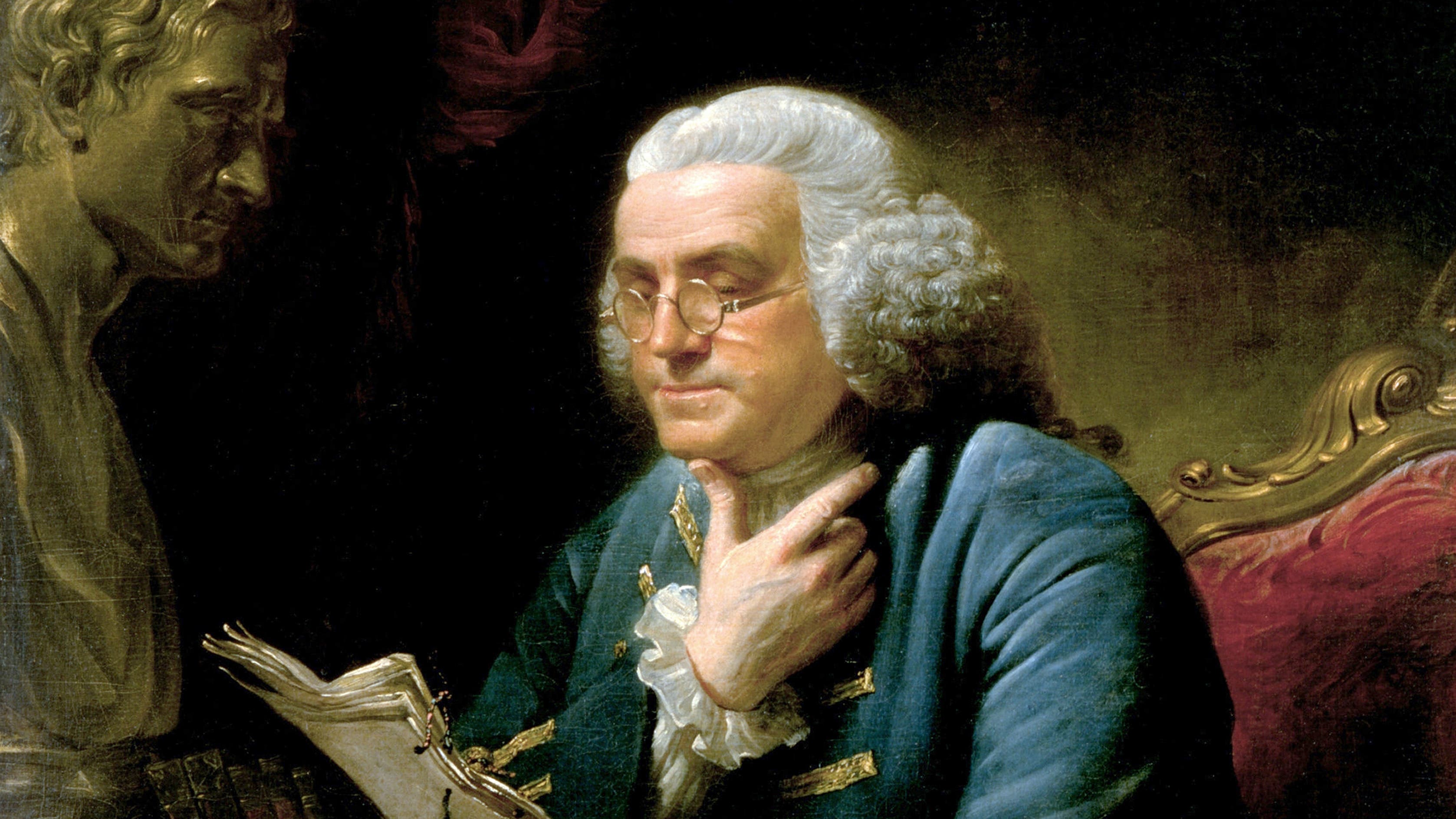
In the early 20th century, the Library of Congress took another great leap forward thanks to the support of President Theodore Roosevelt, who in 1903 issued an executive order transferring the records of the Continental Congress and the personal papers of six founding fathers—George Washington, Alexander Hamilton, Benjamin Franklin, James Madison and James Monroe—to the library from the State Department.
President Warren G. Harding issued another key executive order in 1921, transferring the original copies of the Declaration of Independence and the U.S. Constitution to the Library of Congress for safekeeping and display to the public. These founding documents would move to their permanent home in the National Archives in 1952.
A new Art-Deco style annex building opened in 1939 to hold the library’s ever-growing collections. The latter half of the 20th century saw the Library of Congress build its collections at an unprecedented rate, largely driven by the impact of automation on its cataloging procedures and its expansion into overseas acquisitions.
From 1954-75, during the tenure of Librarian of Congress L. Quincy Mumford, the library’s collection grew from 10 million to 17 million volumes.
Library of Congress Today
A third major building, named for James Madison, opened in 1980, doubling the library’s size.
Its two older buildings were renamed that same year—the original 1897 structure for Thomas Jefferson and the 1939 annex building for John Adams—and both underwent extensive restorations and modernizations in the 1980s and ‘90s.
Today’s Library of Congress boasts 21 reading rooms, including the Main Reading Room, located in the Jefferson Building.
What's in the Library of Congress Catalog?
With the dawn of the Internet era, the Library of Congress website and its National Digital Library Program (both launched in 1994) created an increasingly valuable online research destination, including a high-quality electronic catalog of historical documents and other research materials.
By 2012, the library’s American Memory website had grown to include some 37.6 million primary source materials (including manuscripts, photographs, films and audio recordings) available for teachers to use in the classroom.
In 2007, the Packard Humanities Institute transferred its campus in Culpepper, Virginia, to the Library of Congress for the opening of its new National Audio-Visual Center, a state-of-the-art facility used to preserve the library’s audio-visual collections.
By 2016, when Carla Hayden was sworn in as the first woman and first African American to become librarian of Congress, the library had more than 3,000 people on staff and more than 38 million books and 70 million manuscripts in its catalog.
According to its website, the Library of Congress receives approximately 15,000 items, and adds about 12,000 items to its catalog each day. Most of these come in through the copyright registration process; others through gifts, purchases and exchange with libraries in the United States as well as abroad. In 2015, the Library of Congress announced plans to archive every single Tweet.
Sources
History of the Library of Congress, Library of Congress website.
Fascinating Facts, Library of Congress website.
Library of Congress: American Memory.