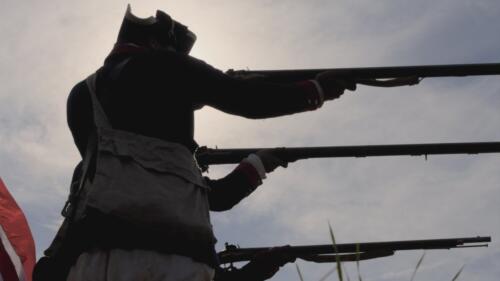
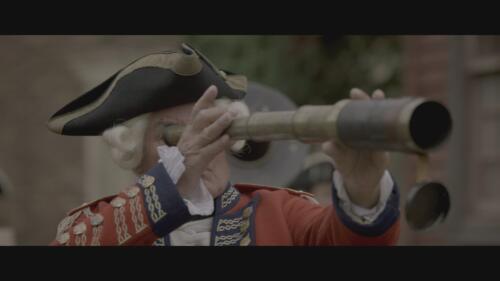
Americans and British Face Off in War of 1812 and related media

  • Log out

Americans and British Face Off in War of 1812 (3:10)

Shortly after gaining its independence, the United States goes to war with England over its seizure of U.S. ships and sailors.

Watch Similar Videos

  • This video can be viewed when you log in with your TV provider.

    Select your TV provider to log in to have full access to videos

    • Select your TV provider
    • See More Providers
    Don't see your TV provider? Learn more

Your Parental Control settings do not allow you to view thiscontent.

Related Videos (10)

  • Americans and British Face Off in War of 1812
    Americans and British Face Off in War of 1812

    Video Clip (3:10)

    Shortly after gaining its independence, the United States goes to war with England over its seizure of U.S. ships and sailors.

    Video Clip (3:10)
  • Andrew Jackson Defends New Orleans in War of 1812
    Andrew Jackson Defends New Orleans in War of 1812

    Video Clip (3:41)

    Video Clip (3:41)
  • Eisenhower Leads America
    Eisenhower Leads America

    Video Clip (3:21)

    This five-star general and 34th U.S. president launched the Space Race and created the federal interstate highway system.

    Video Clip (3:21)
  • Arthur Wiknik
    Arthur Wiknik

    Video Clip (3:42)

    As an 18-year-old draftee, Arthur Wiknik was rushed through officer candidate's school. After one month in Vietnam he found himself in the middle of the battle of "Hamburger Hill"--one of the most notorious battles of the war.

    Video Clip (3:42)
  • Raymond Torres
    Raymond Torres

    Video Clip (2:52)

    Navy medic Raymond Torres joined the Navy to attend medical school and was assigned to a Marine Corps company. While tending to wounded Marines during the Khe Sanh battle, Torres was critically injured when a grenade exploded near him.

    Video Clip (2:52)
  • A Soldier's Story: Hamburger Hill
    A Soldier's Story: Hamburger Hill

    Video Clip (4:41)

    In 1969, Arthur Wiknik found himself in one of the Vietnam War's most notorious battles.

    Video Clip (4:41)
  • Preserving the Footage
    Preserving the Footage

    Video Clip (2:04)

    By recovering footage buried away for decades to develop the Vietnam in HD series, see how history is preserved transferring the delicate film to HD.

    Video Clip (2:04)
  • Tet Offensive
    Tet Offensive

    Video Clip (4:53)

    This massive North Vietnamese surprise attack during the 1968 Tet holiday was a crucial turning point in the war.

    Video Clip (4:53)
  • Last Stand of the Confederacy
    Last Stand of the Confederacy

    Video Clip (3:21)

    In march of 1865, Confederate forces made a valiant last stand against General Sherman's advancing troops, but were undone by the most unlikely of errors

    Video Clip (3:21)
  • Grant and Sherman Lead the Union
    Grant and Sherman Lead the Union

    Video Clip (3:57)

    Two unlikely leaders, Ulysses S. Grant and William Tecumseh Sherman become the most essential Union commanders in the Civil War.

    Video Clip (3:57)

Related Speeches & Audio (10)

  • Clinton Commits the United States to the Kosovo War
    Clinton Commits the United States to the Kosovo War

    Audio Clip (0:43)

    On March 24, 1999, after Serbian leaders refused to discuss peace and instead launched an attack against Kosovo, the United States joined forces with NATO in airstrikes against Serbian forces. In an address to the nation, President Bill Clinton explains why the military action is necessary.

    Audio Clip (0:43)
  • Ford Offers Clemency to Draft Evaders
    Ford Offers Clemency to Draft Evaders

    Audio Clip (1:20)

    On September 16, 1974, President Gerald Ford signed a proclamation that would offer Vietnam War draft evaders the chance to earn clemency by performing alternative service for their country. In a speech to the American people, Ford defends his decision as one that's best for the nation.

    Audio Clip (1:20)
  • Reagan Speaks on 40th Anniversary of D-Day
    Reagan Speaks on 40th Anniversary of D-Day

    Audio Clip (0:41)

    On June 6, 1984, in Normandy, France, President Ronald Reagan honors the heroes of D-Day, a pivotal moment during World War II.

    Audio Clip (0:41)
  • Nixon Orders Invasion of Cambodia
    Nixon Orders Invasion of Cambodia

    Audio Clip (1:02)

    On April 30, 1970, President Richard Nixon asks the American people to support his decision to send troops into Cambodia in response to North Vietnam’s invasion of the country.

    Audio Clip (1:02)
  • Pearl Harbor Attack
    Pearl Harbor Attack

    Audio Clip (1:30)

    Shortly after Japanese bombers attacked Pearl Harbor on December 7, 1941, NBC radio reporter H. V. Kaltenborn brings the nation up to date as the events play out in the Pacific.

    Audio Clip (1:30)
  • Lyndon Johnson and Robert McNamara Plan Airstrikes in Vietnam
    Lyndon Johnson and Robert McNamara Plan Airstrikes in Vietnam

    Audio Clip (3:31)

    In a recorded phone call on February 26, 1965, Secretary of Defense Robert McNamara and President Lyndon B. Johnson discuss possible airstrikes in Vietnam.

    Audio Clip (3:31)
  • Lyndon Johnson Considers Troop Increase in Vietnam
    Lyndon Johnson Considers Troop Increase in Vietnam

    Audio Clip (5:02)

    In June 1965, shortly after a coup in South Vietnam led to the 10th change of government in the war torn country, an attack by the North Vietnamese destroyed three U.S. aircraft at Danang. During a recorded telephone conversation with Defense Secretary Robert McNamara on July 2, 1965, President Lyndon B. Johnson contemplates whether the war can be won.

    Audio Clip (5:02)
  • Franklin D. Roosevelt on American Progress in World War II
    Franklin D. Roosevelt on American Progress in World War II

    Audio Clip (1:00)

    With the United States now entered into World War II, President Franklin D. Roosevelt uses the occasion of Washington’s birthday to broadcast to the nation on February 23, 1942, an outline of America’s progress in the war.

    Audio Clip (1:00)
  • Franklin D. Roosevelt Establishes United States as Arsenal of Democracy
    Franklin D. Roosevelt Establishes United States as Arsenal of Democracy

    Audio Clip (1:08)

    President Franklin D. Roosevelt heralds the defense program of the United States and urges Americans to support an increase in aid to Great Britain to help defeat the Axis powers.

    Audio Clip (1:08)
  • Franklin D. Roosevelt's 1941 Labor Day Speech
    Franklin D. Roosevelt's 1941 Labor Day Speech

    Audio Clip (1:37)

    In his Labor Day radio broadcast in 1941, President Franklin D. Roosevelt reminds his fellow citizens of the need to devote America’s industrial effort to building weaponry in order to "crush Hitler and his Nazi forces."

    Audio Clip (1:37)

Related Photo Galleries (4)

  • Civil War: Artifacts
    Civil War: Artifacts

    9 Photos

    Explore Civil War artifacts, from medical kits and personal hygiene items, to carbines and currency.

    (9 Photos)
  • Memorial Day
    Memorial Day

    17 Photos

    Images of memorials and celebrations of the Memorial Day holiday.

    (17 Photos)
  • Faces of the Civil War
    Faces of the Civil War

    28 Photos

    The Library of Congress recently acquired a rare collection of nearly 700 Civil War-era ambrotype and tintype photographs, donated by the Liljenquist family.

    (28 Photos)
  • Vietnam War: Leaders
    Vietnam War: Leaders

    15 Photos

    View images of the Presidents, politicians, and military leaders who influenced American involvement in the Vietnam War.

    (15 Photos)

Shop HISTORY