Campaign Spot: Jimmy Carter's Bio (1976) (4:24)
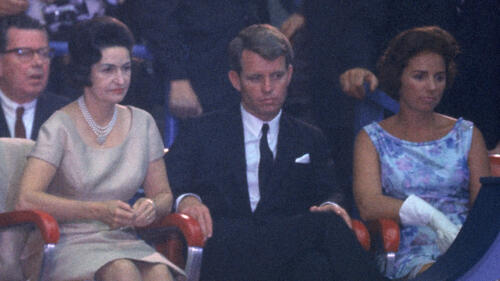
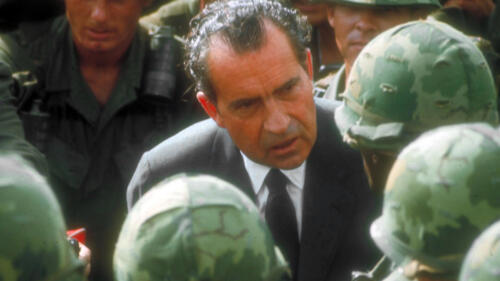
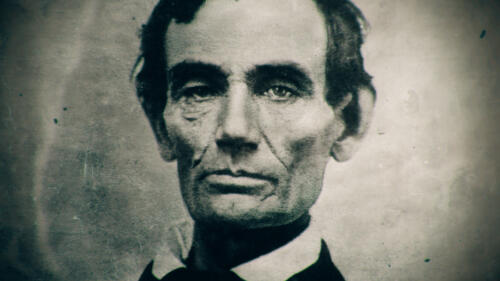
Georgia Governor Jimmy Carter was a Washington outsider, a position he stressed during his campaign.
-
This video can be viewed when you log in with your TV provider.
Select your TV provider to log in to have full access to videos
-
- Select your TV provider
- See More Providers
Related Videos (10)
-
Campaign Spot: Jimmy Carter's Bio (1976)
Campaign Spot: Jimmy Carter's Bio (1976)Video Clip (4:24)
Video Clip (4:24)
Georgia Governor Jimmy Carter was a Washington outsider, a position he stressed during his campaign.
-
Campaign Spot: Southerner Jimmy Carter (1976)
Campaign Spot: Southerner Jimmy Carter (1976)Video Clip (0:49)
Video Clip (0:49)
Carter reminds his fellow southerners that there had not been a president from the deep South since 1848, in a radio commercial meant to appeal to the deep South. Ultimately Carter won this region, but Ford got more white southern votes.
-
Campaign Spot: Ice Cream (1964)
Campaign Spot: Ice Cream (1964)Video Clip (1:00)
Video Clip (1:00)
Another in the series of LBJs spots against Barry Goldwater. Ice Cream first aired on Saturday, September 12, 1964, days after the broadcast of the controversial Peace Little Girl/Daisy ad.
-
Campaign Spot: Kennedy, Kennedy (1960)
Campaign Spot: Kennedy, Kennedy (1960)Video Clip (1:01)
Video Clip (1:01)
This 1960 campaign spot makes use of JFK's relative youth and a repetitious jingle.
-
Campaign Spot: Nixon's Experience (1960)
Campaign Spot: Nixon's Experience (1960)Video Clip (1:00)
Video Clip (1:00)
At the end of a long press conference, then President Dwight Eisenhower was asked about his Vice President, Richard Nixon. He hesitated and replied that he couldnt remember Nixons contributions
-
Campaign Spot: Peace Little Girl (1964)
Campaign Spot: Peace Little Girl (1964)Video Clip (1:00)
Video Clip (1:00)
The Daisy ad, one of the most famous political ads of all time, aired only once, but was replayed on the news and elsewhere throughout LBJs campaign. The ad, which implies that a Goldwater presidency could lead to nuclear war, is believed to have played a major role in Johnsons defeat of his opponent.
-
Campaign Spot: Telephone Hotline (1964)
Campaign Spot: Telephone Hotline (1964)Video Clip (0:21)
Video Clip (0:21)
Another classic spot in the history of campaign ads. Russia is calling. In the midst of the Cold War, who would you rather pick up the phone? By the vanguard Madison Avenue ad agency, Doyle Dane Bernbach (DDB).
-
Campaign Spot: China (1972)
Campaign Spot: China (1972)Video Clip (1:02)
Video Clip (1:02)
One of Nixons lasting legacies was his trip to China to normalize relations between the two countries which had been cut off for 20 years. No American president had ever visited China. Nixons tip signaled a major change -- for both America and Chinas policies. And for Republicans, a huge reason to re-elect their candidate.
-
Campaign Spot: McGovern Defense (1972)
Campaign Spot: McGovern Defense (1972)Video Clip (1:01)
Video Clip (1:01)
In this ad, McGoverns defense cuts are criticized, questioning the candidates priorities for national security.
-
Campaign Spot: Peace (1976)
Campaign Spot: Peace (1976)Video Clip (0:30)
Video Clip (0:30)
Gerald Ford took office after Nixon resigned in 1973. Ford attempted to distance himself from the Nixon presidency, showcasing himself as a normal guy. His campaign focused on an upbeat, positive view of America.
Related Speeches & Audio (10)
-
Reagan and Carter in 1980 Presidential Debate
Reagan and Carter in 1980 Presidential DebateAudio Clip (1:06)
Audio Clip (1:06)
Held on October 28, 1980, the debate between former California governor Ronald Reagan and incumbent President Jimmy Carter covers the issues of inflation, the energy crisis and terrorism. In his closing statement, Reagan makes an impact when he poses this question: "Are you better off now than you were four years ago?"
-
Reagan and Mondale in 1984 Presidential Debate
Reagan and Mondale in 1984 Presidential DebateAudio Clip (1:15)
Audio Clip (1:15)
On October 21, 1984, President Ronald Reagan and former Vice President Walter Mondale engage in their second nationally broadcast debate. When Henry Trewhitt of the Baltimore Sun asks the president about his advancing age, Reagan turns the question on its head by promising not to make an issue of his opponent’s youth and inexperience.
-
Lyndon Johnson's Inaugural Address
Lyndon Johnson's Inaugural AddressAudio Clip (2:02)
Audio Clip (2:02)
On January 20, 1965, Lyndon B. Johnson began his first elected term as president of the United States. In his inaugural address, Johnson calls for the nation to unite toward a common goal.
-
Franklin D. Roosevelt Accepts Fourth Term Nomination
Franklin D. Roosevelt Accepts Fourth Term NominationAudio Clip (2:08)
Audio Clip (2:08)
Broadcast from a Pacific coast naval base to the Democratic National Convention in Chicago, Illinois, on July 20, 1944, Franklin D. Roosevelt accepts his party’s nomination for an unprecedented fourth presidential bid and speaks about postwar preparations now that victory is close at hand.
-
Obama Addresses 2004 Democratic Convention
Obama Addresses 2004 Democratic ConventionAudio Clip (2:51)
Audio Clip (2:51)
On July 27, 2004, Barack Obama, then a little-known Democratic nominee for the U.S. Senate from Illinois, delivers the keynote address at the Democratic National Convention. His speech, in which he describes his personal story of the American Dream, catapults him into the national spotlight.
-
George McGovern Picks Eagleton as Running Mate
George McGovern Picks Eagleton as Running MateAudio Clip (1:48)
Audio Clip (1:48)
On July 14, 1972, presidential candidate Sen. George McGovern announced the selection of Sen. Thomas Eagleton as candidate for vice president. Eagleton describes his reaction when he received the phone call from McGovern.
-
Reagan Endorses Barry Goldwater
Reagan Endorses Barry GoldwaterAudio Clip (0:58)
Audio Clip (0:58)
When Ronald Reagan, as spokesperson for General Electric, gives his “Time for Choosing” speech in support of Barry Goldwater’s 1964 presidential run, he establishes himself as an important player in the Republican Party and jumpstarts his political career.
-
Nixon Reelected to Presidency
Nixon Reelected to PresidencyAudio Clip (1:03)
Audio Clip (1:03)
On November 7, 1972, incumbent President Richard Nixon won a second term in a landslide victory over Democrat George McGovern. In a brief statement from the Oval Office, President Nixon promises to bring "peace with honor" in Vietnam and to usher in a "new era of peace" with the Soviet Union.
-
Reagan Accepts Presidential Nomination
Reagan Accepts Presidential NominationAudio Clip (1:33)
Audio Clip (1:33)
After unsuccessfully seeking the presidential nomination in 1968 and 1976, Ronald Reagan was nominated at the Republican National Convention on September 7, 1980. In his acceptance speech, the former California governor tells American taxpayers that they do not exist to fund the federal government.
-
Nixon Resigns
Nixon ResignsAudio Clip (4:16)
Audio Clip (4:16)
After the revelations of the Watergate scandal, President Richard Nixon announces to the nation on August 8, 1974, that he will resign the presidency at noon the following day.
Most Popular Videos on History.com
-
America Divided
(3:54)
-
Caroline Dries: NYU Dorm
(3:26)
Newest Videos on History.com
-
Vietnam in HD Preview
(2:00)
-
Two For the Road
(1:48)
-
HISTORY says Thanks
(2:47)
Shop HISTORY
-
Larry the Cable Guy Bobblehead
Own the official Larry Bobblehead and GIT-R-DONE!
-
-
Swamp People Troy Mask
Want the ultimate Big Head? The Swamp People Troy Mask is for Cajuns and Cajuns at heart.
$44.99
Buy Now
Email Updates
Keep up with the latest History shows, online features, special offers and more.
Sign up