Joseph Stalin (2:20)
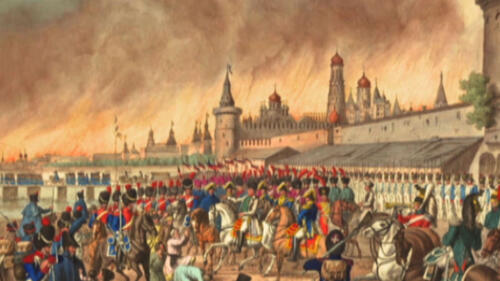
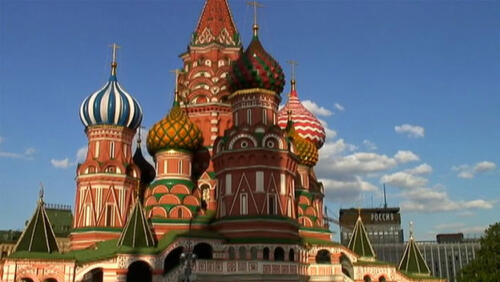
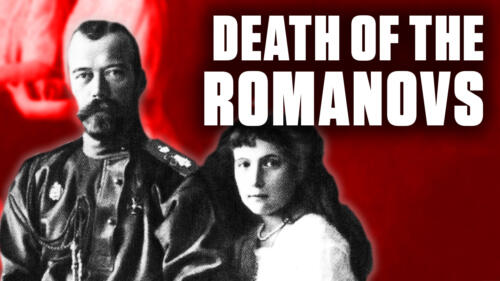
For nearly 30 years, the Soviet Union is controlled by this ruthless tyrant, who sends millions to their death.
-
This video can be viewed when you log in with your TV provider.
Select your TV provider to log in to have full access to videos
-
- Select your TV provider
- See More Providers
Related Videos (1)
-
Joseph Stalin
Joseph StalinVideo Clip (2:20)
Video Clip (2:20)
For nearly 30 years, the Soviet Union is controlled by this ruthless tyrant, who sends millions to their death.
Related Speeches & Audio (10)
-
The Eisenhower Doctrine
The Eisenhower DoctrineAudio Clip (1:01)
Audio Clip (1:01)
In order to suppress growing Soviet influence in the Middle East following the Suez Crisis of 1956, President Dwight D. Eisenhower appears before a joint session of Congress on January 5, 1957, to present a policy that will become known as the Eisenhower Doctrine. It holds that the United States would be authorized to provide military assistance "to secure and protect the territorial integrity" of any nations threatened by international communism.
-
Reagan Addresses British Parliament
Reagan Addresses British ParliamentAudio Clip (0:17)
Audio Clip (0:17)
On June 8, 1982, in the first speech by an American president to a meeting of both houses of the British Parliament, President Ronald Reagan presents his hope for a future that would "leave Marxism-Leninism on the ash heap of history."
-
U.S. and U.S.S.R. Tussle Over Germany
U.S. and U.S.S.R. Tussle Over GermanyAudio Clip (2:38)
Audio Clip (2:38)
Upon his return from commanding U.S. occupation forces in Germany, Gen. Lucius Clay holds a press conference on May 17, 1949, and fields questions about the growing tension between the United States and the Soviets over the division of Germany.
-
Russia Has A-Bomb
Russia Has A-BombAudio Clip (0:56)
Audio Clip (0:56)
In the January 5, 1951, episode of Edward R. Murrow's Hear It Now radio broadcast, Atomic Energy Commissioner Gordon Deane fields questions from reporters about Russia's possession of the atomic bomb.
-
U.S.-Soviet Tension Builds
U.S.-Soviet Tension BuildsAudio Clip (2:32)
Audio Clip (2:32)
On February 28, 1946, Secretary of State James Byrnes addresses the Overseas Press Club to discuss the purposes of the United Nations. In his speech, Byrnes makes an indirect reference to the Soviet Union when he declares that the United States is prepared to "act to prevent aggression."
-
Eisenhower Weighs Chance for Peace in the Cold War
Eisenhower Weighs Chance for Peace in the Cold WarAudio Clip (3:40)
Audio Clip (3:40)
On April 16, 1953, after the death of Russian Premier Joseph Stalin, President Dwight D. Eisenhower delivers what is known as his “Cross of Iron” speech before the American Society for Newspaper Editors, contrasting the philosophies of the Soviet Union and the United States.
-
What the Russian Atomic Bomb Means to America
What the Russian Atomic Bomb Means to AmericaAudio Clip (5:13)
Audio Clip (5:13)
On October 12, 1949, two weeks after President Harry Truman announced that Russia had developed the atom bomb, Gen. Omar Bradley, chairman of the Joint Chiefs of Staff, delivers a speech about the impact of this discovery on American policy.
-
U.S. Receives News of Soviet Invasion of Czechoslovakia
U.S. Receives News of Soviet Invasion of CzechoslovakiaAudio Clip (0:49)
Audio Clip (0:49)
An August 22, 1968, a U.S. Democratic Platform hearing is interrupted when Chairman Hale Boggs is handed a bulletin announcing the Soviets' invasion of Czechoslovakia. Rep. Boggs reads the news and Secretary of State Dean Rusk makes a hasty departure to find out what's going on.
-
Bush and Gorbachev Sign the START I Treaty
Bush and Gorbachev Sign the START I TreatyAudio Clip (2:25)
Audio Clip (2:25)
On July 31, 1991, the Strategic Arms Reduction Treaty was signed in Moscow by U.S. President George H.W. Bush and Soviet President Mikhail Gorbachev, committing each superpower to reducing nuclear arms by a third. In a press conference held at the Kremlin, President Bush discusses the economic cooperation implicit in the peace negotiations.
-
Ford's Address at the Helsinki Conference
Ford's Address at the Helsinki ConferenceAudio Clip (1:54)
Audio Clip (1:54)
On August 1, 1975, at the Helsinki Accords, a major diplomatic agreement was signed by 35 nations, including the United States and the Soviet Union, in an attempt to secure peace between the eastern and western blocs. In a speech delivered at the Finland conference, President Gerald Ford promises to do his part for the good of all nations.
Related Photo Galleries (2)
-
Communist Leaders
Communist Leaders(12 Photos)
12 Photos
During the 20th century, the worldwide spread of communism took many different forms under the direction of each country's leadership.
-
Russian Rulers
Russian Rulers(18 Photos)
18 Photos
From the Romanovs to Revolution and beyond, discover the rulers and politicians behind Russia's tumultuous history.
Most Popular Videos on History.com
-
Attack on Pearl Harbor
(1:49)
Newest Videos on History.com
-
Vietnam in HD Preview
(2:00)
-
Two For the Road
(1:48)
-
HISTORY says Thanks
(2:47)
Shop HISTORY
-
The Berlin Wall DVD
It surrounded the free city of West Berlin, but it symbolized a prison for those on the outside.
$19.99
Buy Now -
America The Story of Us Book & DVD Set
Own the DVD & the stunning companion book from the most anticipated HISTORY broadcast of all time.
$49.99
Buy Now
Email Updates
Keep up with the latest History shows, online features, special offers and more.
Sign up