LBJ: Gulf of Tonkin Incident and related media

  • Log out

LBJ: Gulf of Tonkin Incident (3:49)

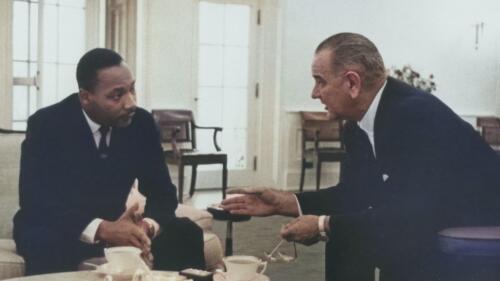
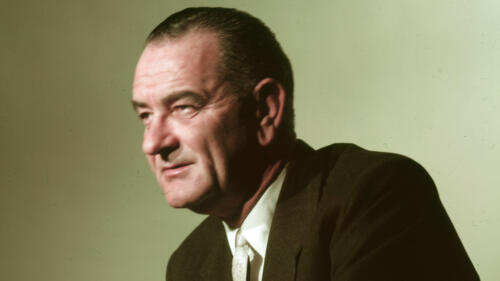
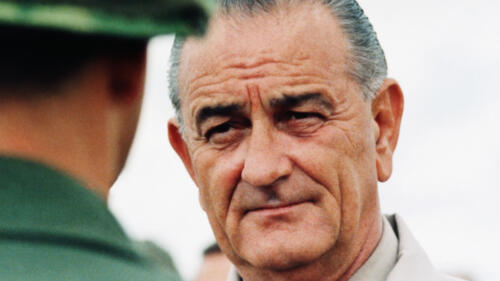
The Gulf of Tonkin incident was the result of mounting tensions between the U.S. and North Vietnam.

Watch Similar Videos

  • This video can be viewed when you log in with your TV provider.

    Select your TV provider to log in to have full access to videos

    • Select your TV provider
    • See More Providers
    Don't see your TV provider? Learn more

Your Parental Control settings do not allow you to view thiscontent.

Related Videos (10)

  • LBJ: Gulf of Tonkin Incident
    LBJ: Gulf of Tonkin Incident

    Video Clip (3:49)

    The Gulf of Tonkin incident was the result of mounting tensions between the U.S. and North Vietnam.

    Video Clip (3:49)
  • Deconstructing History: Aircraft Carriers in Vietnam
    Deconstructing History: Aircraft Carriers in Vietnam

    Video Clip (1:31)

    U.S. forces relied heavily on aircraft carriers during the Vietnam War to assist in the air war strategy.

    Video Clip (1:31)
  • Deconstructing History: Huey Helicopters in Vietnam
    Deconstructing History: Huey Helicopters in Vietnam

    Video Clip (1:30)

    The UH-1 "Huey" helicopter became a symbol of U.S. combat forces in Vietnam.

    Video Clip (1:30)
  • Helicopters in Vietnam
    Helicopters in Vietnam

    Video Clip (5:08)

    Helicopters played a vital role in America's air mobility strategy during the Vietnam War.

    Video Clip (5:08)
  • Phantom Pilot
    Phantom Pilot

    Video Clip (4:51)

    Steve Conley seeks to honor his father's legacy by preserving the films he left behind of his time as an F-4 Phantom pilot in Vietnam.

    Video Clip (4:51)
  • Eisenhower Leads America
    Eisenhower Leads America

    Video Clip (3:21)

    This five-star general and 34th U.S. president launched the Space Race and created the federal interstate highway system.

    Video Clip (3:21)
  • Keith Connolly
    Keith Connolly

    Video Clip (4:31)

    Air Force pilot Keith Connolly was among the first USAF units to be stationed within South Vietnam. During his second tour, he flew F-4 Phantoms targeting the Ho Chi Minh Trail and witnessed two of his men go missing after his plane had been hit.

    Video Clip (4:31)
  • Veteran's Home Movies
    Veteran's Home Movies

    Video Clip (2:44)

    Find out why more veterans came home with home movies from Vietnam and how they helped give Vietnam in HD a unique perspective of the war.

    Video Clip (2:44)
  • Charles Brown
    Charles Brown

    Video Clip (3:07)

    Raised in the segregated South, Charles Brown thought his best shot at a better life was to join the Army. He was stationed with the 101st Airborne Division and quickly appointed platoon sergeant, leading search and destroy missions through the jungles of Vietnam.

    Video Clip (3:07)
  • Barry Romo
    Barry Romo

    Video Clip (3:24)

    Fresh out of high school, Barry Romo enlisted in the U.S. Army to serve in Vietnam. Romo was awarded a bronze star for his efforts but grew disillusioned with the war and later joined a controversial group called Vietnam Veterans Against the War.

    Video Clip (3:24)

Related Speeches & Audio (10)

  • Nixon Orders Invasion of Cambodia
    Nixon Orders Invasion of Cambodia

    Audio Clip (1:02)

    On April 30, 1970, President Richard Nixon asks the American people to support his decision to send troops into Cambodia in response to North Vietnam’s invasion of the country.

    Audio Clip (1:02)
  • Lyndon Johnson Considers Troop Increase in Vietnam
    Lyndon Johnson Considers Troop Increase in Vietnam

    Audio Clip (5:02)

    In June 1965, shortly after a coup in South Vietnam led to the 10th change of government in the war torn country, an attack by the North Vietnamese destroyed three U.S. aircraft at Danang. During a recorded telephone conversation with Defense Secretary Robert McNamara on July 2, 1965, President Lyndon B. Johnson contemplates whether the war can be won.

    Audio Clip (5:02)
  • John F. Kennedy on Coup in South Vietnam
    John F. Kennedy on Coup in South Vietnam

    Audio Clip (6:06)

    On October 29, 1963, President John F. Kennedy meets with the National Security Council to discuss whether to support the overthrow of South Vietnam's President Ngo Dinh Diem. During the secretly recorded conversation, Secretary of State Dean Rusk and the president craft a detailed plan involving Henry Cabot Lodge, ambassador to South Vietnam, Gen. Paul D. Harkins and the general of the South Vietnamese military, hoping to avoid setting off a civil war in the country.

    Audio Clip (6:06)
  • Nixon on Vietnam War
    Nixon on Vietnam War

    Audio Clip (3:34)

    On March 26, 1971, President Richard Nixon holds a meeting in the Oval Office with his National Security Council to discuss the war in Vietnam. The meeting is secretly recorded. Among the many topics he raises, Nixon recounts a prior conversation with House majority leader Hale Boggs on setting a date for the final withdrawal of U.S. forces.

    Audio Clip (3:34)
  • Ford Offers Clemency to Draft Evaders
    Ford Offers Clemency to Draft Evaders

    Audio Clip (1:20)

    On September 16, 1974, President Gerald Ford signed a proclamation that would offer Vietnam War draft evaders the chance to earn clemency by performing alternative service for their country. In a speech to the American people, Ford defends his decision as one that's best for the nation.

    Audio Clip (1:20)
  • Impact of U.S. Withdrawal on South Vietnam
    Impact of U.S. Withdrawal on South Vietnam

    Audio Clip (2:47)

    Following the January 27, 1973 signing of a ceasefire agreement to end the Vietnam War and the subsequent departure of U.S. troops, the U.S. military prepared the South Vietnamese to take over operations. A U.S. officer who remained in Vietnam to help with the transition is interviewed on October 11, 1973, about the process of bolstering South Vietnam's economy and self-sufficiency.

    Audio Clip (2:47)
  • North Vietnam Disregards Ceasefire Agreement
    North Vietnam Disregards Ceasefire Agreement

    Audio Clip (4:44)

    In an October 12, 1973, interview, Col. Le Gran, U.S. deputy director of intelligence, discusses the discovery that North Vietnam installed SA-2 missiles in the southern city of Khe Sanh shortly after a ceasefire agreement prohibiting military incursion in South Vietnam was signed on January 27 of that year.

    Audio Clip (4:44)
  • U.S. Troops Leave Vietnam
    U.S. Troops Leave Vietnam

    Audio Clip (1:13)

    After the Vietnam War ceasefire was signed on January 27, 1973, the United States had 60 days to withdraw its troops from Vietnam. In an interview on October 9, 1973, Col. Frago, chief of the Army Division of the Defense Attaché, comments on the problems encountered while drawing down the U.S. forces.

    Audio Clip (1:13)
  • Bush on Iraq's Invasion of Kuwait
    Bush on Iraq's Invasion of Kuwait

    Audio Clip (1:38)

    In a live report from the Oval Office, President George H.W. Bush announces the deployment of U.S. armed forces to Saudi Arabia. Troops were sent to the Arab nation to deter further Iraqi aggression after Iraq's invasion of Kuwait on August 2, 1990.

    Audio Clip (1:38)
  • Bush Announces End to Gulf War
    Bush Announces End to Gulf War

    Audio Clip (2:05)

    On February 27, 1991, five months after Iraq invaded Kuwait, the U.S. and its allies forced Saddam Hussein to withdraw his troops. In a nationally broadcast address, President George Bush calls on Iraq to meet the requirements for a permanent ceasefire.

    Audio Clip (2:05)

Related Photo Galleries (1)

  • Vietnam War: Leaders
    Vietnam War: Leaders

    15 Photos

    View images of the Presidents, politicians, and military leaders who influenced American involvement in the Vietnam War.

    (15 Photos)

Shop HISTORY