Shot Down During Vietnam: A Fighter Pilot's Story (2:42)
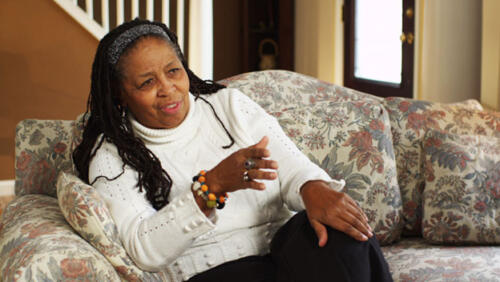
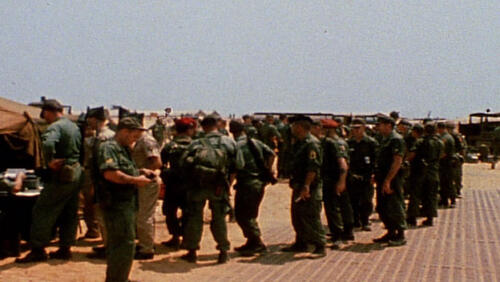
In 1966, an American fighter pilot took off from the USS Enterprise near the coast of Vietnam, only to be shot down and captured by enemy forces.
-
This video can be viewed when you log in with your TV provider.
Select your TV provider to log in to have full access to videos
-
- Select your TV provider
- See More Providers
Related Videos (10)
-
Shot Down During Vietnam: A Fighter Pilot's Story
Shot Down During Vietnam: A Fighter Pilot's StoryVideo Clip (2:42)
Video Clip (2:42)
In 1966, an American fighter pilot took off from the USS Enterprise near the coast of Vietnam, only to be shot down and captured by enemy forces.
-
Vietnam Ace: Fred Olmsted
Vietnam Ace: Fred OlmstedVideo Clip (4:23)
Video Clip (4:23)
F-4 Phantom pilot Fred Olmsted is waiting to escort B-52 bombers into Vietnam, but a mixup on the ground leaves him and his team stranded in the air. Olmsted decides to go hunting for some MiG-21s.
-
F-4 Phantom II: Highest Kill Ratio
F-4 Phantom II: Highest Kill RatioVideo Clip (1:32)
Video Clip (1:32)
The F-4 Phantom II was a successful adversary to the North Vietnamese MiG-17 and achieved a high kill ratio of 2.5-to-1.
-
Gunkills of Vietnam
Gunkills of VietnamVideo Clip (3:45)
Video Clip (3:45)
Skyraider pilots use powerful 20mm cannons to combat MiG fighters during the Vietnam War.
-
F-4 Phantom vs. MiG-17
F-4 Phantom vs. MiG-17Video Clip (4:05)
Video Clip (4:05)
The chase is on over the skies of Vietnam when an American F-4 Phantom and a Vietnamese MiG-17 fighter clash.
-
Phantom Pilot
Phantom PilotVideo Clip (4:51)
Video Clip (4:51)
Steve Conley seeks to honor his father's legacy by preserving the films he left behind of his time as an F-4 Phantom pilot in Vietnam.
-
P51 Pilots
P51 PilotsVideo Clip (3:20)
Video Clip (3:20)
Veterans Frederick Blesse and Walker Mahurin P51 fighter jets during the korean War.
-
Flying in the South Pacific
Flying in the South PacificVideo Clip (3:31)
Video Clip (3:31)
Fred Linden's father was a PBY naval aviator during World War II and left behind two reels of film documenting his service in the South Pacific.
-
Korean War Veteran Edwin Simmons
Korean War Veteran Edwin SimmonsVideo Clip (2:44)
Video Clip (2:44)
Brigadier General Edwin Simmons recalls the Korean War.
-
Korean War Homecoming
Korean War HomecomingVideo Clip (2:18)
Video Clip (2:18)
Korean War soldiers returned home to a population that was largely disinterested in the war effort.
Related Speeches & Audio (10)
-
Nixon Orders Invasion of Cambodia
Nixon Orders Invasion of CambodiaAudio Clip (1:02)
Audio Clip (1:02)
On April 30, 1970, President Richard Nixon asks the American people to support his decision to send troops into Cambodia in response to North Vietnam’s invasion of the country.
-
John F. Kennedy on Coup in South Vietnam
John F. Kennedy on Coup in South VietnamAudio Clip (6:06)
Audio Clip (6:06)
On October 29, 1963, President John F. Kennedy meets with the National Security Council to discuss whether to support the overthrow of South Vietnam's President Ngo Dinh Diem. During the secretly recorded conversation, Secretary of State Dean Rusk and the president craft a detailed plan involving Henry Cabot Lodge, ambassador to South Vietnam, Gen. Paul D. Harkins and the general of the South Vietnamese military, hoping to avoid setting off a civil war in the country.
-
Nixon on Vietnam War
Nixon on Vietnam WarAudio Clip (3:34)
Audio Clip (3:34)
On March 26, 1971, President Richard Nixon holds a meeting in the Oval Office with his National Security Council to discuss the war in Vietnam. The meeting is secretly recorded. Among the many topics he raises, Nixon recounts a prior conversation with House majority leader Hale Boggs on setting a date for the final withdrawal of U.S. forces.
-
Lyndon Johnson Considers Troop Increase in Vietnam
Lyndon Johnson Considers Troop Increase in VietnamAudio Clip (5:02)
Audio Clip (5:02)
In June 1965, shortly after a coup in South Vietnam led to the 10th change of government in the war torn country, an attack by the North Vietnamese destroyed three U.S. aircraft at Danang. During a recorded telephone conversation with Defense Secretary Robert McNamara on July 2, 1965, President Lyndon B. Johnson contemplates whether the war can be won.
-
Impact of U.S. Withdrawal on South Vietnam
Impact of U.S. Withdrawal on South VietnamAudio Clip (2:47)
Audio Clip (2:47)
Following the January 27, 1973 signing of a ceasefire agreement to end the Vietnam War and the subsequent departure of U.S. troops, the U.S. military prepared the South Vietnamese to take over operations. A U.S. officer who remained in Vietnam to help with the transition is interviewed on October 11, 1973, about the process of bolstering South Vietnam's economy and self-sufficiency.
-
North Vietnam Disregards Ceasefire Agreement
North Vietnam Disregards Ceasefire AgreementAudio Clip (4:44)
Audio Clip (4:44)
In an October 12, 1973, interview, Col. Le Gran, U.S. deputy director of intelligence, discusses the discovery that North Vietnam installed SA-2 missiles in the southern city of Khe Sanh shortly after a ceasefire agreement prohibiting military incursion in South Vietnam was signed on January 27 of that year.
-
U.S. Troops Leave Vietnam
U.S. Troops Leave VietnamAudio Clip (1:13)
Audio Clip (1:13)
After the Vietnam War ceasefire was signed on January 27, 1973, the United States had 60 days to withdraw its troops from Vietnam. In an interview on October 9, 1973, Col. Frago, chief of the Army Division of the Defense Attaché, comments on the problems encountered while drawing down the U.S. forces.
-
War Report on B-29 Use
War Report on B-29 UseAudio Clip (2:36)
Audio Clip (2:36)
Brig. Gen. H.S. Hansell delivers a report in June 1944 on American B-29 bomber strikes against Germany and Japan.
-
Paul Tibbets on Dropping the Atomic Bomb
Paul Tibbets on Dropping the Atomic BombAudio Clip (2:38)
Audio Clip (2:38)
On July 3, 1987, 42 years after dropping the atomic bomb on Hiroshima, Enola Gay pilot Paul Tibbets recalls his mindset during the fateful mission on August 6, 1945.
-
Ford Offers Clemency to Draft Evaders
Ford Offers Clemency to Draft EvadersAudio Clip (1:20)
Audio Clip (1:20)
On September 16, 1974, President Gerald Ford signed a proclamation that would offer Vietnam War draft evaders the chance to earn clemency by performing alternative service for their country. In a speech to the American people, Ford defends his decision as one that's best for the nation.
Related Photo Galleries (3)
-
Vietnam War: Leaders
Vietnam War: Leaders(15 Photos)
15 Photos
View images of the Presidents, politicians, and military leaders who influenced American involvement in the Vietnam War.
-
World War II Pilots and Planes
World War II Pilots and Planes(12 Photos)
12 Photos
View photos of World War II pilots and planes.
-
Voices of D-Day
Voices of D-Day(9 Photos)
9 Photos
Our most powerful and genuine accounts of D-Day come from the veterans who live through this momentous piece of history.
Most Popular Videos on History.com
-
D-Day Deception
(3:24)
Newest Videos on History.com
-
Vietnam in HD Preview
(2:00)
-
Two For the Road
(1:48)
-
HISTORY says Thanks
(2:47)
Shop HISTORY
-
Vietnam in HD DVD Set
Their story is in danger of being lost to history. This six-hour miniseries spans the massive initial troop build-up in 1965 to the fall of Saigon a decade later.
$24.95
Buy Now -
Battle 360: The Bloody Battle of Guadalcanal DVD
Own this chronicle of the epic showdown with Japanese forces at Guadalcanal, one of the most critical battles in WWII.
$11.99
Buy Now -
WWII in HD DVD Set
The only people to see the war like this were the ones who lived it. Until now…
Email Updates
Keep up with the latest History shows, online features, special offers and more.
Sign up