1960s
The 1960s marked one of the most tumultuous and divisive decades in world history. The era saw an energized civil rights movement, the Vietnam War and antiwar protests, countercultural movements, political assassinations and the emerging "generation gap."

Start Here

War. Assassinations. Riots. Violent protest clashes. America was certainly no stranger to political violence, but 1968 appeared to bring the bloodletting to new heights.

Explore facts about the 1963 JFK assassination, the perpetrator, investigations...and conspiracy theories surrounding the event.

The Woodstock music festival may not have been a smoothly run event, but it featured electric moments—musical and otherwise—that made it unforgettable.

The hippie counterculture reached its height during the escalation of U.S. involvement in Vietnam, and subsided as the conflict drew to a close.
The Great Society
The Great Society
What did President Lyndon B. Johnson envision with his suite of domestic programs known as the Great Society? What did the programs entail, and what became of them after the 1960s?
3 Major Assassinations of the 1960s


Explore All Related Topics

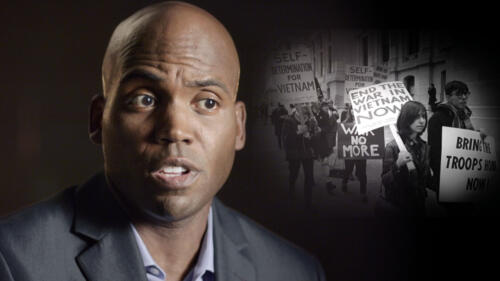
Vietnam War protests began among antiwar activists and students, then gained prominence in 1965 when the U.S. military began bombing North Vietnam heavily.

Behind the modern fairground of turkey legs and jousting knights is a 1960s vision of counterculture.

Yasgur's farm looked like a 'war zone,' but months later, all the garbage was gone.

The Woodstock Music Festival began on August 15, 1969 in Bethel, New York. Billed as "3 Days of Peace and Music,” the epic event become synonymous with the counterculture movement of the 1960s.

King penned of the civil rights movement's seminal texts while in solitary confinement, initially on the margins of a newspaper.

During the same summer as the legendary Woodstock music festival, the Harlem concert series featured major African American artists against a backdrop of massive social change.

In an excerpt from his new book, author Steven M. Gillon details the final hours of Lee Harvey Oswald's life.

After sprinters Tommie Smith and John Carlos made a defiant gesture from the awards podium at the Games, they faced repercussions—but also gained respect.

When Tommie Smith and John Carlos raised their fists in protest at the 1968 Summer Games, Australian runner Peter Norman stood by them. It lost him his career.

When Neil Armstrong stepped down a ladder and onto the moon on July 20, 1969, the nation achieved an audacious vision. But there were surprising moments along the way and not everything went as expected.
Explore the history of Apollo 11, the first moon landing, including JFK's vision, NASA's Apollo program and a complete mission timeline.

Yes, there was rocket science. But there were also extraordinary amounts of low-tech weaving, stitching and caulking.

Neil Armstrong’s celebrated “one small step” was far from the most dangerous maneuver in the effort to send three men to the moon and return them home a week later. See a timeline of the entire mission.

The Yippies found their voice by organizing an absurdist counter-convention—including nominating a pig for president.

The competition between the two bands led to some of the most forward-looking and influential music of all time.

The pop sound of The Beach Boys blended Brian Wilson’s musical ambitions with the Californian dream.


