Cold War
The Cold War rivalry between the United States and the Soviet Union lasted for decades and resulted in anti-communist suspicions and international incidents that led the two superpowers to the brink of nuclear disaster.

Start Here

American and British pilots ferried some 2.3 million tons of supplies into West Berlin on a total of 277,500 flights, in what would be the largest air relief operation in history.

These are the steps that brought the United States and Soviet Union to the brink of nuclear war in 1962.

Reagan's words reflected a shift that was underway as Soviet reforms and protests were pressuring the East German government to open barriers to the West.

Amid an escalating arms race, civil defense drills offered comically simple strategies for surviving an atomic attack.

3 Cold War Close Calls


Explore All Related Topics

The Cold War was a period of geopolitical tension between Western democracies and communist nations such as China and the Soviet Union.

How eight countries got bogged down in the Vietnam War's Cold War proxy battle.

The Space Race began after the 1959 launch of Sputnik, and space became an arena for the Cold War competition between Soviets and the US.

In the Cuban Missile Crisis of October 1962, U.S. and Soviet leaders engaged in a tense standoff over Soviet nuclear missiles in Cuba.

Mikhail Gorbachev introduced perestroika and glasnost as well-intentioned reforms to transform the Soviet Union.

The two leaders came close to a historic nuclear agreement in 1986—until a dispute over a single word brought negotiations to a halt.

On August 13, 1961, Berlin woke up to a city divided by barbed wire and armed guards.

The CIA tried to fight communism by dosing unwitting soldiers and prisoners with acid.

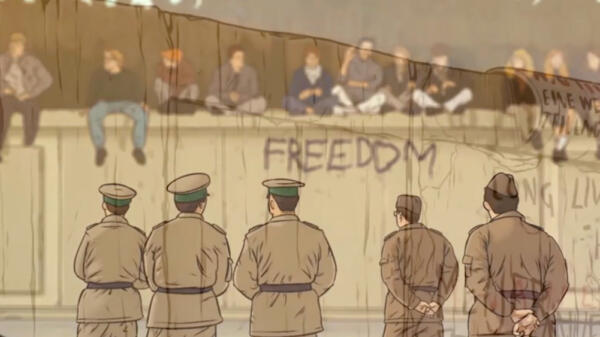
On August 13, 1961, the Communist government of East Germany began to build the Berlin Wall, a barbed wire and concrete wall separating East and West Berlin. The Berlin Wall fell on November 9, 1989.

More than 5,000 people escaped past the the Cold War symbol—all the more impressive considering the Berlin Wall was actually two walls.

The pledge, as recited by U.S. schoolchildren, wasn’t standardized until World War II, and didn’t contain “under God” until 1954.

Their designs were so radical that test flights over the Nevada desert often prompted a rash of 'UFO' sightings.

The Manhattan Project’s Trinity test—the first atomic bomb detonation—led to infant deaths, cancer and decades of health problems.