Great Depression
The Great Depression was the worst economic downturn in the history of the industrialized world, lasting from 1929 to 1939. Explore every angle of the crisis and how it affected everyday Americans, from the stock market crash of 1929, to the Dust Bowl, to FDR’s response to the economic calamity—the New Deal.

Start Here

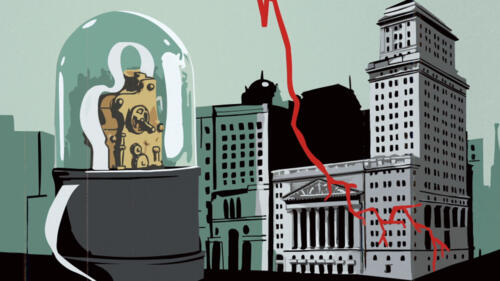
In 1929, several factors, including the stock market crash, caused the Great Depression, the worst economic downturn in world history.

As left the drought-ravaged Midwest, American-born migrants were viewed as disease-ridden intruders who sponged off the government.

As Americans confronted a banking crisis, the Great Depression and then World War II, FDR talked to Americans through radio broadcasts.

The Hoover Dam, LaGuardia Airport and the Bay Bridge were all part of FDR's New Deal investment.

3 Pillars of FDR’s New Deal


How Artists Helped End the Great Depression
History Shorts: How Artists Helped End the Great Depression
By giving support to an army of creative workers, the government was able to lift the prospects of an entire nation.
Explore All Related Topics

In 1929, several factors, including the stock market crash, caused the Great Depression, the worst economic downturn in world history.

The Dust Bowl, the drought-stricken Southern and Central Plains during the 1930s, was one of the worst disasters in U.S. history.

A historic surplus and a bright idea led to relief for thousands of unemployed men during the height of the Depression.

The Great Depression was the worst economic downturn in modern history, lasting from the stock market crash of 1929 until 1939.

In the Stock Market Crash of 1929, about 16 million shares were traded on Black Tuesday, October 29, 1929, ushering in the Great Depression.

By the time Thanksgiving became an official U.S. holiday in 1863, wild turkeys had nearly disappeared. But Depression-era shifts in land use helped the animals rebound.

A number of complex factors helped to create the conditions necessary for the Great Depression, including adherence to the gold standard.

To justify the need for New Deal projects, the government employed photographers to document the suffering of those affected, producing some of the most iconic photographs of the Great Depression.

The buttery, salty snack wasn’t always a movie-must.

As Americans confronted a banking crisis, the Great Depression and then World War II, FDR talked to Americans through radio broadcasts.

From the moment the leaders of the victorious Allied nations arrived in France for the peace conference in early 1919, the post-war reality began to diverge sharply from Wilson’s idealistic vision.

The concept of retirement took hold after President Franklin D. Roosevelt enacted the Social Security Act of 1935.

Theories ranged from negligence to sabotage to an 'act of God.'
The 1937 Hindenburg disaster shocked the world as a German airship burst into flames, killing 36 and ending the age of zeppelins.

Explore lesser-known truths about the Hindenburg disaster, including media myths, and how politics shaped the fate of the airship.

Uncovering the woman behind the famous Depression-era photograph.


