Immigration
Immigration, the movement of people from one country to another, is a fundamental aspect of human history, though it was as divisive hundreds of years ago as it is today.

Start Here

Attitudes and laws around U.S. immigration have vacillated between welcoming and restrictive since the country's beginning.

An Ellis Island clerk and amateur photographer captured the wide-ranging origins of immigrants entering the United States in the early 1900s.

The act put an end to long-standing national-origin quotas that favored those from northern and western Europe.

In 1929, Section 1325 criminalized undocumented immigration for the first time. Its aim was to decrease Mexican immigration.
How the Cold War Contributed to the Modern Central American Migrant Crisis
How the Cold War Contributed to the Modern Central American Migrant Crisis
For decades migrants from Central America have fled their homes from corruption, crime, poverty and violence to seek a better life in the United States. One of the major causes of such strife? The Cold War.

3 Key Laws


Explore All Related Topics

An Ellis Island clerk and amateur photographer captured the wide-ranging origins of immigrants entering the United States in the early 1900s.

Annie Moore was a teenager from Ireland; Arne Petterssen was a Norwegian seaman who had overstayed his shore leave in New York.

Attitudes and laws around U.S. immigration have vacillated between welcoming and restrictive since the country's beginning.

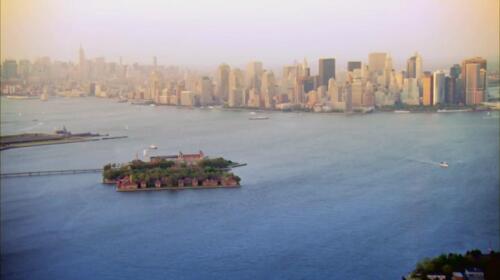
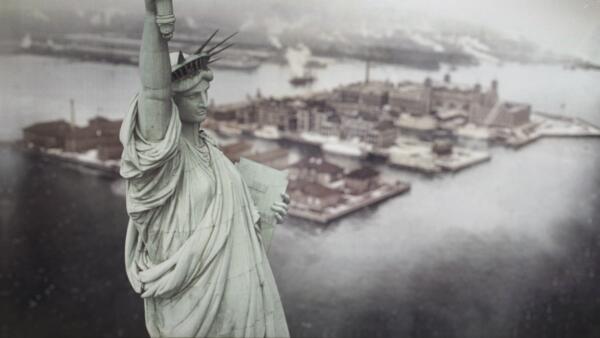
Ellis Island, a historical site in New York City, opened in 1892 as an immigration station and processed more than 12 million immigrants until it closed in 1954.

In 1929, Section 1325 criminalized undocumented immigration for the first time. Its aim was to decrease Mexican immigration.

For decades, they denied their German roots and claimed Scandinavian origins.

The legislation set quotas to curb immigration from southern and eastern Europe.

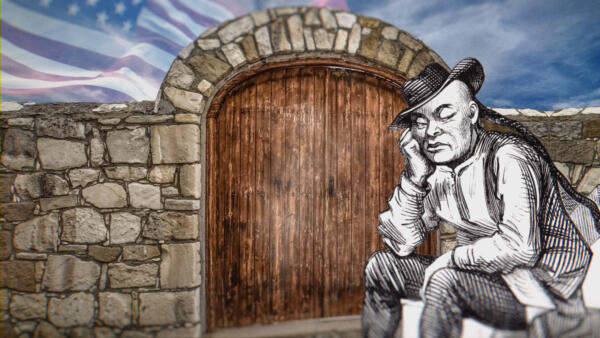
The Gentlemen's Agreement of 1907 was an informal agreement between the United States of America and the Empire of Japan whereby Japan agreed to deny passports to laborers intending to enter the United States and the US would not impose restrictions on Japanese immigrants already in the country.

The Irish Potato Famine was caused by a potato disease in Ireland in the mid-1800s. The “Great Hunger” killed about 1 million people, forcing another million to emigrate.

The coveted document was first printed on green paper in the 1940s.

As many as 1.3 million people may have been swept up in the Eisenhower-era campaign called 'Operation Wetback.'

Photographer Jacob Riis exposed the squalid and unsafe state of NYC immigrant tenements.

Chinese Immigration to the United States Most of the early Chinese immigration to the United States can be traced to the mid-1800s. These early immigrants—some 25,000 in the 1850s alone—came seeking economic opportunity in America. The Chinese arriving ...

Immigration in the Colonial Era From its earliest days, America has been a nation of immigrants, starting with its original inhabitants, who crossed the land bridge connecting Asia and North America tens of thousands of years ago. By the 1500s, the firs...