Inventions & Science
Science and inventions have propelled human progress, as well as led to human destruction. From the creation of the first stone tools to reusable space rockets to the atomic bomb, each step builds upon the history of human knowledge.


Start Here

The epic race to standardize the electrical system—later known as the War of the Currents—lit up 19th-Century America.

Here are the milestones and innovations that drove the automotive revolution.

Some of the modern world's most groundbreaking technologies emerged during this 30-year period.

Barcode tech was first patented in 1949, but engineers came up with the UPC code in the 1970s to answer a need for better efficiency in grocery stores.
Top 10 Kitchen Inventions That Changed Food Forever
Top 10 Kitchen Inventions That Changed Food Forever
From fire to the air fryer, humans have a remarkable history of innovating in the kitchen. Discover the 10 kitchen inventions that changed food forever, in this episode of History Countdown.

3 Important Inventions Discovered by Accident


Explore All Related Topics


Appearing in 1900, the first license plates in the United States were made of leather.

Americans eat about a million pounds of the stuff a year.

A Revolutionary War-era identification helped kickstart a new scientific field.
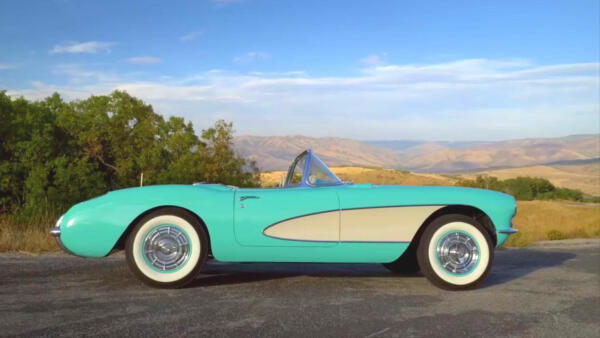


It’s hard to credit a single person with inventing the automobile. Not only did an estimated 100,000 patents lead to cars as we know them, but people also disagree on what qualifies as the first true automobile. For historians who think that early steam-powered road vehicles fit the bill, the answer is Nicolas-Joseph Cugnot, a […]

When Were Cars Invented? The 1901 Mercedes, designed by Wilhelm Maybach for Daimler Motoren Gesellschaft, deserves credit for being the first modern motorcar in all essentials. Its thirty-five-horsepower engine weighed only fourteen pounds per horsepowe...

In 1886, German inventor Karl Benz patented what is generally regarded as the first modern car. Less than two decades later, in 1903, Massachusetts and Missouri became the first states to require a driver’s license, although it wasn’t necessary to pass a test to obtain one. In 1908, Henry Ford launched the Model T, the […]

Did you know pizza took the United States by storm before it became popular in its native Italy?

Many of modern society’s most cherished institutions and ideas—not to mention the objects we use every day—can trace their origins back to the ancient world.

Inventors have tinkered with self-driving cars for more than 100 years.

This 1960s chatbot was a precursor to AI. Its maker grew to fear it.

Explore the celebrated roadway, much of which remains drivable today.

Originally a second banana character in 'Donkey Kong' in 1981, Mario went on to conquer the video game world.

Which were the most influential cars in U.S. automotive history? Here are our picks.