U.S. Constitution
The U.S. Constitution, signed on September 17, 1787, created America’s federal government, establishing fundamental laws and legal structures while guaranteeing certain basic rights for American citizens.
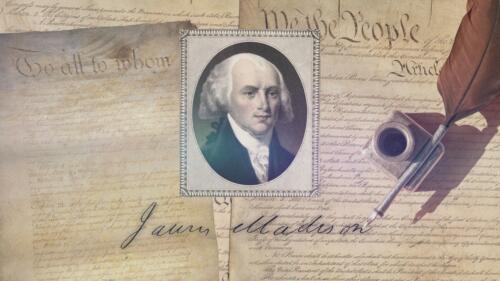

Start Here

Since the Constitution was ratified in 1789, hundreds of thousands of bills have been introduced attempting to amend the nation's founding document. But only 27 amendments to the U.S. Constitution have been ratified, out of 33 passed by Congress and sent to the states. See summaries of all 27.

The constitutional framers may have viewed Indigenous people of the Iroquois Confederacy as inferior, but that didn't stop them from admiring their federalist principles.

The founding father worried that trying to spell out all of Americans' rights in the series of amendments could be inherently limiting.

Through amendments and legal rulings, the Constitution has transformed in some critical ways.
Freedom of Religion in the U.S.
Freedom of Religion in the U.S.
What is the history of the freedom of religion as outlined in the first amendment to the U.S. Constitution? How is this freedom enforced? How does religious policy manifest in the real world?

3 Key Amendments


Explore All Related Topics

The 13th-century pact inspired the U.S. Founding Fathers as they wrote the documents that would shape the nation.

Through amendments and legal rulings, the Constitution has transformed in some critical ways.

After helping draft the Constitution, James Madison defended it in the Federalist Papers. Those writings continue to influence American legal thought.

When Aaron Burr set off to claim lands in the Southwest, President Thomas Jefferson intended to stop him.

McCulloch v. Maryland was a landmark Supreme Court case from 1819. The court’s ruling asserted national supremacy over state authority.

James Madison wrote the amendment to assure that the newly drafted Constitution would not trample on states' or individuals' rights.

Origins Of Free Press Before the thirteen colonies declared independence from Great Britain, the British government attempted to censor the American media by prohibiting newspapers from publishing unfavorable information and opinions. One of the first c...

Freedom of speech—the right to express opinions without government restraint—is a democratic ideal that dates back to ancient Greece. In the United States, the First Amendment guarantees free speech, though the United States, like all modern democracies, places limits on this freedom.

Flag burning has long tested the limits of freedom of speech.

The Founding Fathers had just broken free from one empire, and the idea that foreign power could influence their young democracy was a prominent source of anxiety.

Since the Constitution was ratified in 1789, hundreds of thousands of bills have been introduced attempting to amend the nation's founding document. But only 27 amendments to the U.S. Constitution have been ratified, out of 33 passed by Congress and sent to the states. See summaries of all 27.
The First Amendment to the U.S. Constitution protects the freedom of speech, religion and the press. It also protects the right to peaceful protest and to petition the government.

Religion In Colonial America America wasn’t always a stronghold of religious freedom. More than half a century before the Pilgrims set sail in the Mayflower, French Protestants (called Huguenots) established a colony at Fort Caroline near modern-day Jac...

The Bill of Rights—the first ten amendments to the U.S. Constitution protecting the rights of U.S. citizens—were ratified on December 15, 1791.

The Preamble to the U.S. Constitution The Preamble outlines the Constitution's purpose and guiding principles. It reads: The Bill of Rights were 10 amendments guaranteeing basic individual protections, such as freedom of speech and religion, that became...