World War II
It was the biggest and deadliest war in history, spanning six grueling years and involving countries in nearly every part of the world. Sparked by the 1939 Nazi invasion of Poland, World War II pitted the Allied forces (led by the United States, Great Britain and the U.S.S.R.) against the Axis powers (Nazi Germany, Japan and Italy). Explore the battles, key players and atrocities from the war and its impact on geopolitics and humankind today.

Start Here

The majority of the world's countries eventually formed two opposing alliances: the Allies and the Axis.

By the time the first Japanese bomber appeared over Pearl Harbor on December 7, 1941, tensions between Japan and the United States had been mounting for the better part of a decade, making war seem inevitable.

The Allied invasion of Normandy was among the largest military operations ever staged.

The Holocaust was the persecution and murder of millions of Jews, Roma, political dissidents, homosexuals and more by Hitler's Nazi regime.
The Hidden Army of Women That Helped Defeat Hitler
Flashback: The Hidden Army of Women That Helped Defeat Hitler
This 1944 American propaganda film imagine’s Hitler’s surrender and explains the Füher’s greatest mistake – his underestimation of American women. This episode of Flashback shows how female wartime workers were an indispensable part of America’s victory, even before the war was officially won.

3 Key Battles


Explore All Related Topics

Behind the lines of World War II, the United States and Germany engaged in a nuclear arms race.

Pearl Harbor is a U.S. naval base in Hawaii that was attacked by Japan on December 7, 1941, leading the U.S. to enter World War II.

The Battle of the Bulge occurred from December 1944 to January 1945, when Germany launched a blitzkrieg against Allied forces in Europe.

Francisco Franco ruled Spain as a dictator from 1939 to 1975, rising to power in the Spanish Civil War and repressing political opponents.

These photos show the chaos and courage of the 1940 evacuation, when hundreds of thousands of Allied troops escaped German forces by sea.

Victory over Japan Day ushered in peace after the devastation of World War II.

The atomic bomb and nuclear bombs, powerful weapons that use nuclear reactions as their source of explosive energy, were developed during World War II and are regulated by international agreements.

The Nuremberg trials, which brought Nazi war criminals to justice, were carried out in Nuremberg, Germany, between 1945 and 1949.

The torpedoing of the German ocean liner *Wilhelm Gustloff* in 1945 led to the deaths of some 9,000 men, women and children.
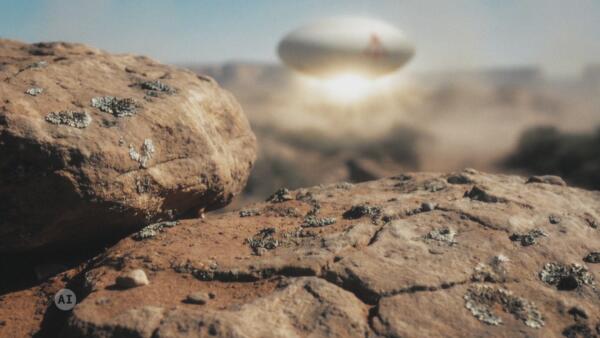
The Secret World War II Plan That Used Astrology
When conventional tactics fail, governments have been known to test the boundaries of reality. During the darkest days of World War II, Britain turned to an astrologer who claimed he could alter the course of the war using the power of the stars.

The grueling 1944–45 Allied offensive reopened the crucial overland supply route to China and dealt the Japanese army one of its worst defeats of the war.

The Molotov-Ribbentrop Pact was a non-aggression pact signed in 1939 by Nazi Germany and the Soviet Union before World War II broke out. The pact lasted until Hitler invaded the Soviet Union in 1941.

On the home front during World War II, life in the U.S. was changed by rationing, defense production, women’s jobs and popular radio and movie entertainment.

Rosie the Riveter was the star of a campaign aimed at recruiting female workers for defense industries during World War II. Artist Normal Rockwell's cover image of Rosie, made in 1943, became, perhaps the most iconic image of working women.