World War II
It was the biggest and deadliest war in history, spanning six grueling years and involving countries in nearly every part of the world. Sparked by the 1939 Nazi invasion of Poland, World War II pitted the Allied forces (led by the United States, Great Britain and the U.S.S.R.) against the Axis powers (Nazi Germany, Japan and Italy). Explore the battles, key players and atrocities from the war and its impact on geopolitics and humankind today.

Start Here

From the Battle of the Atlantic to the Battle of Okinawa, see a timeline of World War II's battles.

By the time the first Japanese bomber appeared over Pearl Harbor on December 7, 1941, tensions between Japan and the United States had been mounting for the better part of a decade, making war seem inevitable.

The Allied invasion of Normandy was among the largest military operations ever staged.

The Holocaust was the persecution and murder of millions of Jews, Roma, political dissidents, homosexuals and others by the Nazi regime.
The Hidden Army of Women That Helped Defeat Hitler
Flashback: The Hidden Army of Women That Helped Defeat Hitler
This 1944 American propaganda film imagine’s Hitler’s surrender and explains the Füher’s greatest mistake – his underestimation of American women. This episode of Flashback shows how female wartime workers were an indispensable part of America’s victory, even before the war was officially won.

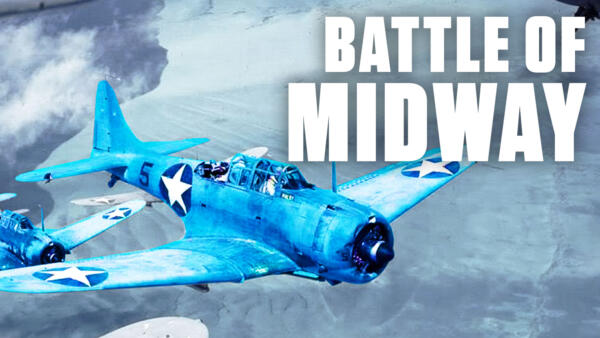
3 Key Battles


Explore All Related Topics

Austria’s national squad had been known as the 'Wunderteam,' but when conscripted to play for Germany, they were less impressive.

Allied military leaders knew that casualties could be staggeringly high. Historians are still calculating the toll.

Neutrality was often more complex than simply avoiding choosing sides.

The majority of the world's countries eventually formed two opposing alliances: the Allies and the Axis.

A look back at one of the most hard-fought battles of World War II.

From the Battle of the Atlantic to the Battle of Okinawa, see a timeline of World War II's battles.

These five key events led to the conclusion of World War II on September 2, 1945.

No reigning British monarch stepped foot on U.S. soil until 1939.