Latin American & Caribbean History
Latin America encompasses Spanish- and Portuguese-speaking countries, including all of South America as well as Mexico, Central America and islands of the Caribbean. Latin American history saw thriving Indigenous cultures overtaken and colonized by the Spaniards and Portuguese between the 15th and 18th centuries, followed by independence movements in the early 19th century.

Start Here

Before Fidel Castro and the Cold War chill, America and Cuba shared close economic and political ties.

For decades, the Mothers and Grandmothers of the Plaza de Mayo have demanded answers.

A coming-of-age adventure through five South American countries set Che Guevara on the path to becoming a Marxist revolutionary.

Most may not think of Mexico as contributing to the Allied effort, but it contributed key resources, as well as fighting power.
Mexican Independence
Struggle for Mexican Independence
8 U.S. states exist on land that used to belong to Mexico. Learn more about Mexico's history!

3 Key Independence Movements


Explore All Related Topics

Across centuries of folklore, La Llorona has come to embody changing ideas about motherhood, grief and colonial history.

The 1928 Banana Massacre in Colombia inspired one of the most haunting parts in Gabriel García Márquez’s novel.

After World War II, many Nazi war criminals changed their identities and escaped across the Atlantic. Only some were captured and brought to justice.

The Aztecs combined two interlocking calendars into a 52-year cycle that set the rhythms of daily life and sacred rituals.

The Niña and Pinta were lost to history, but the wreck of the Santa María is somewhere near Haiti.

'We should not play soccer amid the concentration camps and torture chambers,' wrote proponents of an international tournament boycott that year.

During World War I, Denmark finally sold Saint Thomas, Saint John and Saint Croix to the U.S. for $25 million in gold coin.

In 2019, the island nation long ruled by dictator Fidel Castro and his family, got a new leader: Miguel Díaz-Canel.

The annual Mexican holiday marks the anniversary of the Battle of Puebla.

The Goiânia accident remains one of the worst radioactive incidents not involving a nuclear power plant.


Hugo Chávez’s Bolivarian Revolution transformed Venezuela and led to repeated clashes with the United States.

The 1823 doctrine has been used to justify several interventions in Latin America.

The Panamanian dictator, once a U.S. ally, was arrested on drug trafficking charges.

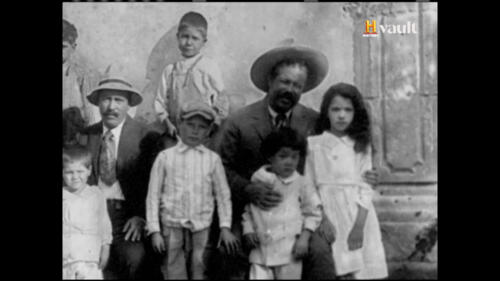
Pancho Villa (1878-1923) was a famed Mexican revolutionary and guerilla leader. He joined Francisco Madero’s uprising against Mexican President Porfirio Díaz in 1909, and later became leader of the División del Norte cavalry and governor of Chihuahua. A...

Steeped in history, Mexico is home to over 100 million people.


