

World War II With Tom Hanks | HISTORY
World War II stands as the most devastating and defining conflict in modern history. “World War II with Tom Hanks” reexamines the war for a new century, tracing its full arc—from the rise of Hitler to the atomic bombs that reshaped the world order. Visit this page each week to discover the deeper history behind each episode.
World War II stands as the most devastating and defining conflict in modern history. “World War II with Tom Hanks” reexamines the war for a new century, tracing its full arc—from the rise of Hitler to the atomic bombs that reshaped the world order. Visit this page each week to discover the deeper history behind each episode.

Digital Exclusive

HISTORY and HANKS For Our Troops are honoring veterans by sharing their stories that keep history alive.
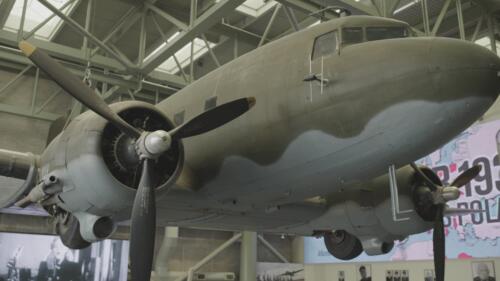
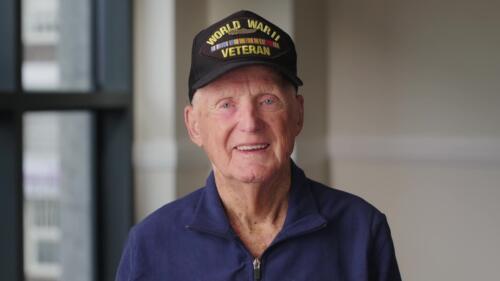
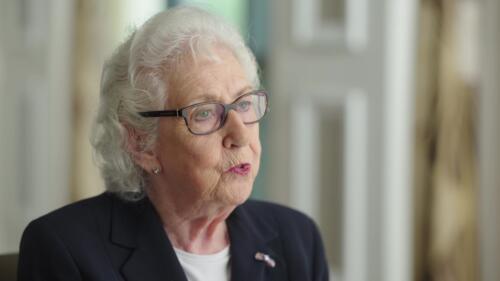
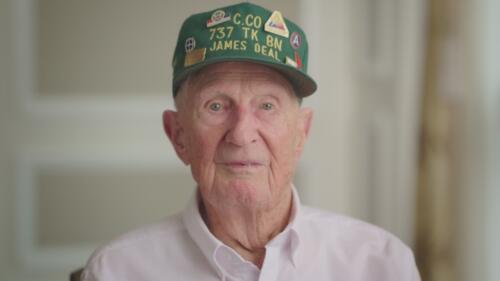
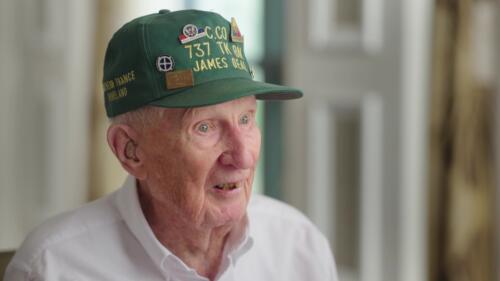

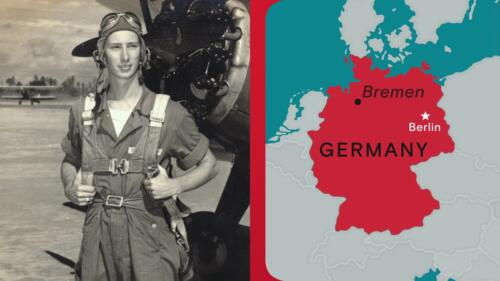
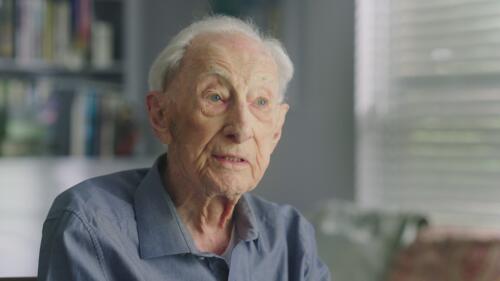
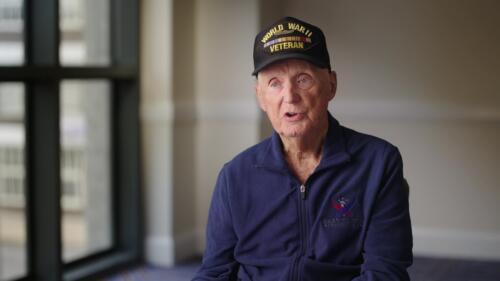

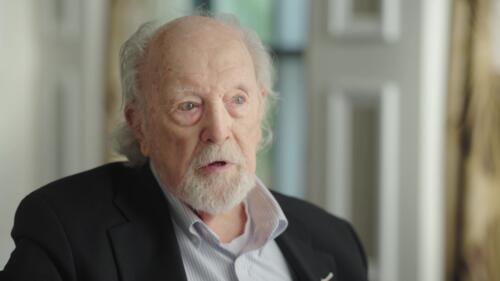
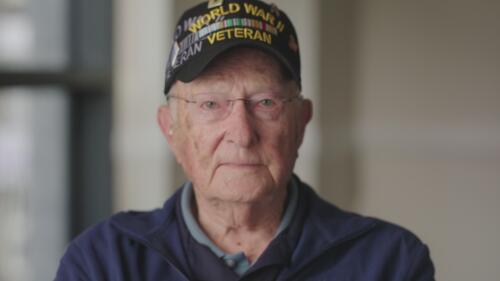
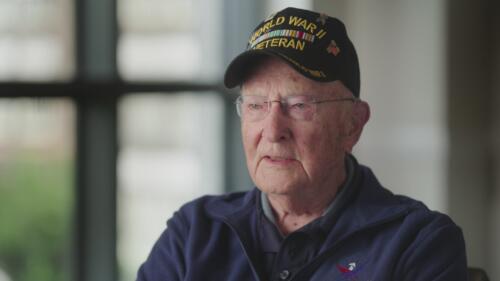
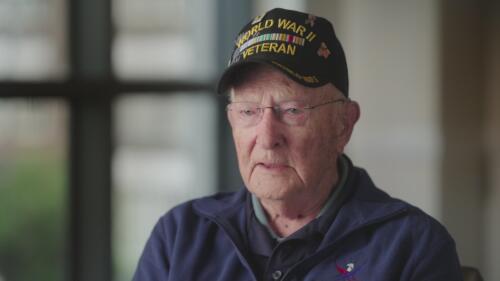
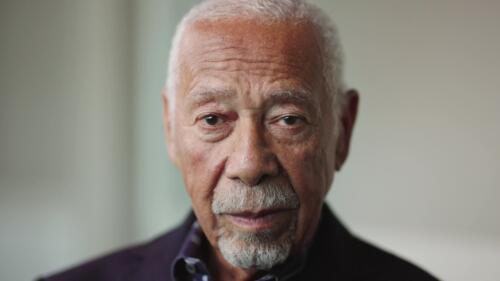
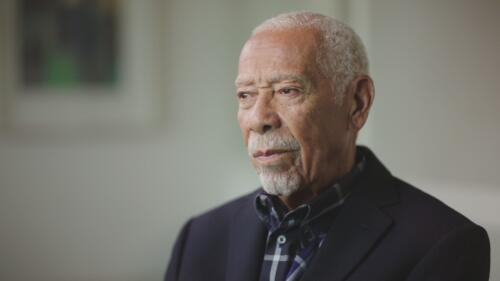
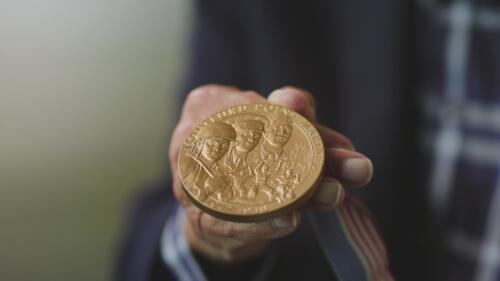
HANKS For Our Troops


EPISODE 20: Fallout

The colossal power of the atomic bomb drove the world’s two leading superpowers into a new confrontation.
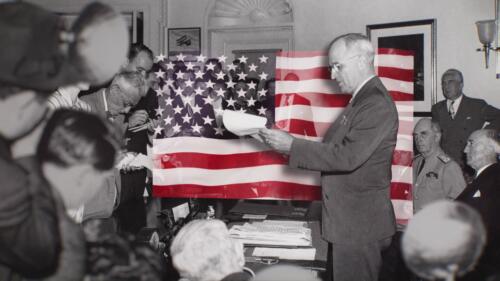

At the 1945 Potsdam Conference, U.S. President Truman, Soviet leader Stalin and British Prime Minister Churchill negotiated political goals after World War II.
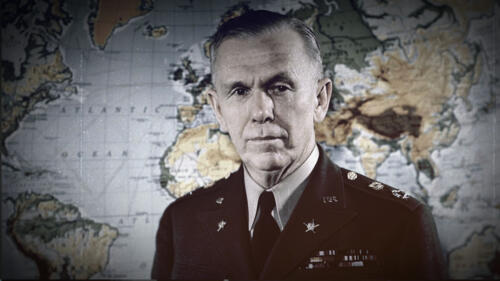
EPISODE 19: Endgame
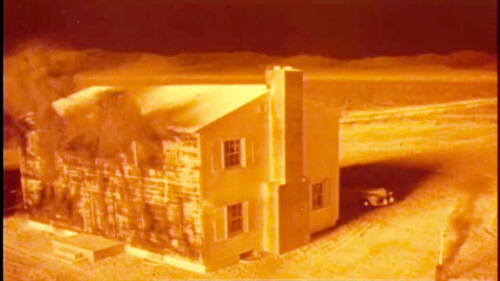

Before the 1945 atomic blasts, they were thriving cities. In a flash, they became desolate wastelands.

The explicit reason was to swiftly end the war with Japan. But it was also intended to send a message to the Soviets.
EPISODE 18: Last Days of the Reich

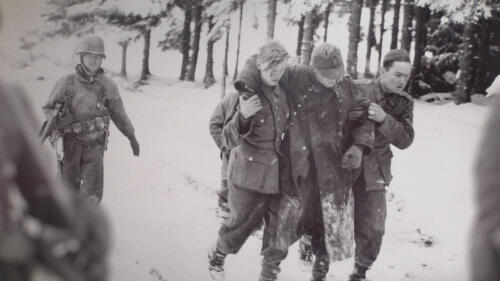
Under cripplingly cold winter conditions, American troops proved their mettle.

Winston Churchill called it 'undoubtedly the greatest American battle' of World War II.

One prize in the Allies' race to take Berlin: the German scientists working to develop the atomic bomb.
EPISODE 17: No Surrender

A look back at one of the most hard-fought battles of World War II.

Biggest Naval Battle of WWII (Part 1): The Battle of Leyte Gulf
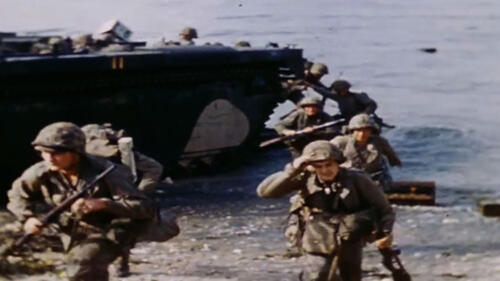
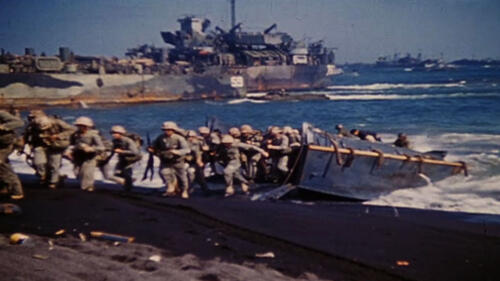
The Battle of Leyte was an amphibious invasion that launched the beginning of the recapture and liberation of the entire Philippines after almost three years of Japanese occupation in this clip from "Battle of Leyte Gulf."

Not until nearly three years after the bombing of Pearl Harbor did Japan adopt suicide aerial attacks as official military strategy.
EPISODE 16: Resistance

Marcel Marceau saved at least 70 Jewish children from the Nazis through risky border crossings during World War II, and his cousin Georges Loinger saved 350.

The Treblinka uprising put a stop to the Holocaust’s second deadliest camp.

Over 240 men and women volunteered for what might have seemed to be a suicidal mission.
Digital Exclusive

World War II With Tom Hanks revisits defining moments in one of history's most devastating conflicts. New episodes Mondays at 8/7c.
EPISODE 15: Home Front

Both nations viewed civilian morale as essential to victory, but Germany shielded its people from many wartime hardships while Japan demanded far greater sacrifice.

Convicted of treason for her infamous “Tokyo Rose” propaganda broadcasts during World War II, American Iva Toguri eventually spent nearly three decades waiting for her name to be cleared.

Find out more about six World War II broadcasters who used the radio waves as a weapon.
EPISODE 14: Long Road to Tokyo

The grueling 1944–45 Allied offensive reopened the crucial overland supply route to China and dealt the Japanese army one of its worst defeats of the war.

China was a vital, but often forgotten, member of the Allies battling Japan—two years before the official start of World War II.
EPISODE 13: Overlord

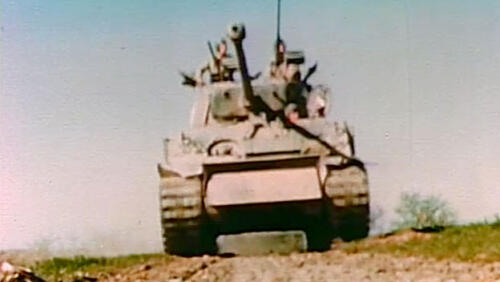
The Allied invasion of Normandy was among the largest military operations ever staged.

Both leaders knew the Allies must invade Normandy, but faced many obstacles before carrying out Operation Overlord.

Get the facts on five D-Day beaches—code-named Utah, Omaha, Gold, Juno and Sword—that the Allies invaded.

On June 6, 1944, more than 156,000 American, British and Canadian troops executed the largest amphibious landing in history. Five veterans share their stories from that day.
EPISODE 12: Battle for the Skies

The Combined Bomber Offensive helped the Allies gain air superiority, crippled Germany's war machine and paved the way for D-Day—but at an enormous human cost.
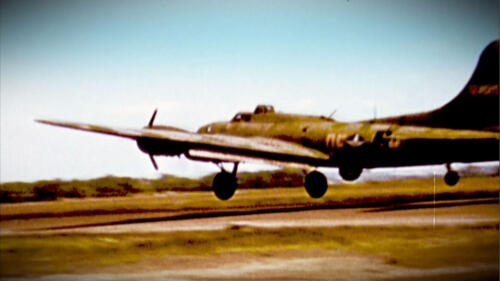

The punishing three-day Allied bombing attack, intended to force a German surrender, leveled the city and left tens of thousands dead.
EPISODE 11: Italy

Gale-force winds wreaked havoc with paratroopers and gliders during World War II's Operation Husky.

The Allies Target Italy When the Allies won the North African Campaign on May 13, 1943, a quarter-million German and Italian troops surrendered at Tunisia, on the north coast of Africa. With the huge Allied army and navy in the southern Mediterranean no...

The Italian Campaign, from July 10, 1943, to May 2, 1945, was a series of Allied beach landings and land battles from Sicily and southern Italy up the Italian mainland toward Nazi Germany during World War II.
EPISODE 10: Stalingrad

Hitler's 1942 decision to attack the city named after the Soviet leader proved devastating and fateful.
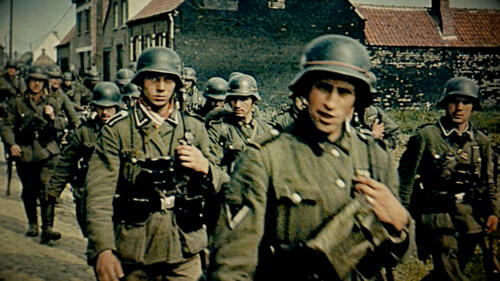

Explore eight facts about the brutal and often overlooked Russian front of World War II.

The Battle of Stalingrad was a brutal military campaign between Russian forces and those of Nazi Germany and the Axis powers during World War II. Germany's defeat in the battle marked a turning point of the war in favor of the Allies.
EPISODE 9: Secrets and Lies

Alan Turing was a British mathematician and logician whose work laid the foundation for modern computer science and artificial intelligence. He was instrumental in breaking Nazi communication encryptions during World War II.
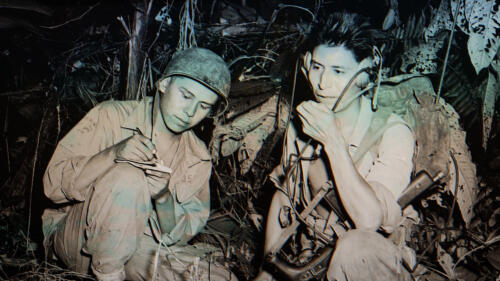

Elizebeth Friedman’s codebreaking helped save the Queen Mary and capture a Nazi spy ringleader in Latin America.
EPISODE 8: Operation Torch

Before D-Day, Allied forces battled across the region’s deserts to secure the Mediterranean and prepare for the invasion of Europe.

After his first battle in North Africa exposed U.S. weaknesses, Eisenhower regrouped, hired General Patton and led major military victories.

On the 70th anniversary of his death get the facts on the famed “Desert Fox.”
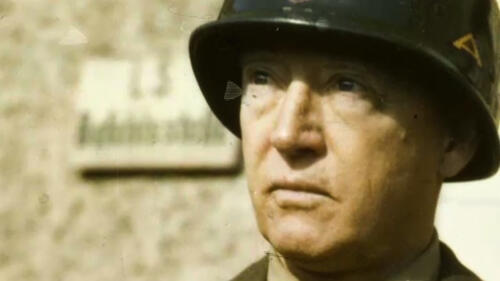
EPISODE 7: Darkness Falls

To craft legal discrimination, the Third Reich studied the United States.

How many were killed, how many children were sent to the site and the numbers of people who attempted to escape are among the facts that reveal the scale of crimes committed at Auschwitz.

Estimates suggest that Nazis murdered 85 percent of the people at Auschwitz. Here are the stories of three who survived.

Allied troops entering former Nazi territory at the close of World War II confronted heartbreaking scenes of unthinkable atrocities.
EPISODE 6: Guadalcanal
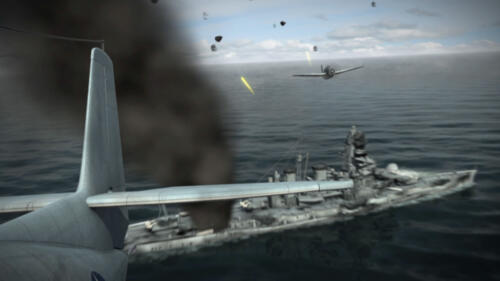

In a decisive victory, inexperienced U.S. troops stopped a Japanese juggernaut.
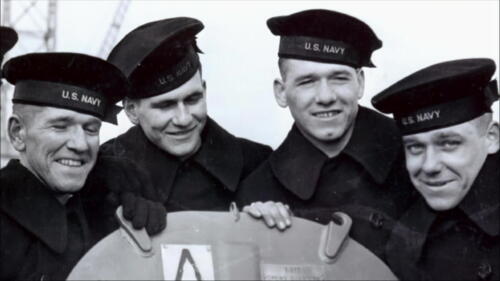
EPISODE 5: The War at Sea

After terrorizing trans-Atlantic ships in World War I, German U-boats grew even more fearsome in World War II.

Get the facts behind a secret meeting between Roosevelt and Churchill that produced a cornerstone of the post-war world order.

The Battle of Midway was an epic WWII clash between the U.S. Navy and the Imperial Japanese Navy that played out six months after the attack on Pearl Harbor. The U.S. Navy’s decisive victory in the air-sea battle (June 3-6, 1942) dashed Japan’s hopes of neutralizing the United States as a naval power and effectively turned the tide of World War II in the Pacific.

The mighty clash between Japanese and U.S. naval forces in June 1942 ended in a stunning—and surprising—Allied victory.
EPISODE 4: Pearl Harbor

From the man who led the evacuation of USS Arizona to the fighter pilot who took to the skies in his pajamas, learn the stories of eight of the many servicemen who distinguished themselves on one of the darkest days in American military history.

The Nanjing Massacre, or the Rape of Nanjing, was the 1937 sacking of Nanjing by Japanese forces during the early years of World War II.

The surprise Japanese assault inflicted heavy losses but failed to strike a decisive blow.

On December 7, 1941, a surprise Japanese attack on Pearl Harbor shocked America. These are the stories of veterans who were there.
EPISODE 3: Barbarossa

Even as millions of Nazi troops massed on his border, Soviet leader Joseph Stalin remained convinced that Adolf Hitler wouldn’t betray him.
Explore eight facts about the brutal and often overlooked Russian front of World War II.

From planning to logistics to weather, how Hitler's Nazi forces fumbled the largest invasion of World War II.
EPISODE 2: Blitz

Where is Dunkirk? Dunkirk is located in the north of France, on the shores of the North Sea near the Belgian-French border. The Strait of Dover, where the distance between England and France is just 21 miles across the English Channel, is located to the...

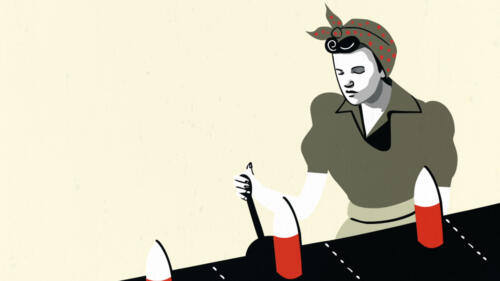
America's largest industry shifted from making cars to bombers, tanks and more—at unparalleled speed.

As Hitler bombed London, its citizens set up makeshift beds in rail cars, on escalators and even in tunnels to get a night's sleep.


EPISODE 1: The Beginning

The Nazis and Soviets were mortal enemies. Why did they sign a nonaggression pact—and why didn't it last?

The Nazi offensive began with a bang—many of them—and led to a global conflict that would span six years.

The Molotov-Ribbentrop Pact was a non-aggression pact signed in 1939 by Nazi Germany and the Soviet Union before World War II broke out. The pact lasted until Hitler invaded the Soviet Union in 1941.
The Big Picture

All changed the course of the war. Some changed the course of the world.

Genocide and atomic weapons only tell part of the story.

From the Battle of the Atlantic to the Battle of Okinawa, see a timeline of World War II's battles.

World leaders. Generals. Industrialists. Strategists. Spies. See who had an outsized impact on the fate of the world.


