U.S. Government and Politics
The U.S. government, with its three distinct branches and system of checks and balances, is responsible for governing the 50 states and all districts and territories of the United States.
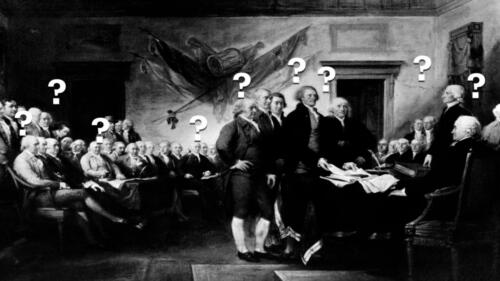

Start Here

The framers referred to Congress as the “first branch” of government—and they established a wide range of powers for both the House and Senate.

Checks and balances refers to a system in U.S. government that ensures no one branch becomes too powerful. The framers of the U.S. Constitution built a system that divides power between the three branches—legislative, executive and judicial—and includes various limits and controls on the powers of each.

From accepting a case to issuing a ruling, this is the process the nine Supreme Court justices follow in considering a case and reaching a decision.

Federalism, or the separation of powers between state and federal government, was entirely new when the founders baked it into the Constitution.
Gerrymandering Explained
Gerrymandering Explained
Where does the term "Gerrymandering" come from, and how long has it been a part of U.S. politics?

3 Branches of Government


Explore All Related Topics

Following Republican victories, Democrats gained control of the House of Representatives after 14 congressmen died in quick succession.

It's a crash course in protocol, politics and public life.

John Jay was an American statesman and Founding Father who served the United States in numerous government offices, including the Supreme Court where he served as the first chief justice.

The Constitution's framers viewed political parties as a necessary evil.

Midterm elections are held on even-numbered years between presidential elections. These 5 midterms flipped control of Congress.

The 1894 midterms saw a historic turnover of power—one that still hasn't been matched.

Tariffs have been used for revenue, protect domestic industry from foreign competitors and cooperate or retaliate against other nations.

Election Day 2026 falls on Tuesday, November 3. In 1845, Congress set Election Day on the first Tuesday after the first Monday in November.

Larger states wanted congressional representation based on population, while smaller states wanted equal representation. They met in the middle.

Since the 1970s, the August state fair has routinely hosted state and federal political candidates hoping to sway Iowa voters.

The United States may be synonymous with 'red, white and blue' due to the iconic design of America’s Stars and Stripes, but it’s just one of many countries that use the color combination on its national flag.

America’s national color palette has been set since 1818 when a law was passed requiring the American flag to sport 13 alternating red and white horizontal stripes—one for each of the original colonies—and a white star for each state on a blue field. Every time the United States admitted another state, a new star was […]

Transcendentalism Popular 19th-century writers, including transcendentalists such as Ralph Waldo Emerson, Henry David Thoreau and Walt Whitman drew inspiration from nature, while artists of the era—including Thomas Cole, Asher Durand and Albert Bierstad...

The death of a sitting member of Congress prompts a series of protocols to honor their service and address the resulting vacancy.
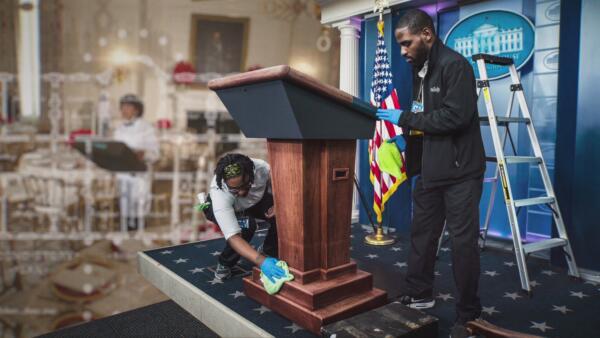
Turning Over the White House
The White House is meant to reflect its occupant, and when a new president comes to town, things have to be changed very quickly. But what goes into the peaceful transfer of power? And how do workers turn the White House over in the blink of an eye?

For U.S. Navy’s elite flight demonstration squad, it all began in the months after World War II.


