U.S. History
All the major chapters in the American story, from Indigenous beginnings to the present day.
World History
History from countries and communities across the globe, including the world’s major wars.
Eras & Ages
From prehistory, though antiquity and into the 21st century, all of history’s biggest chapters.
Culture & Tradition
The stories behind the faiths, food, entertainment and holidays that shape our world.
Science & Innovation
The pivotal discoveries, visionary inventors and natural phenomena that impacted history.
From forge to finish: everything you need to craft blades like a pro.
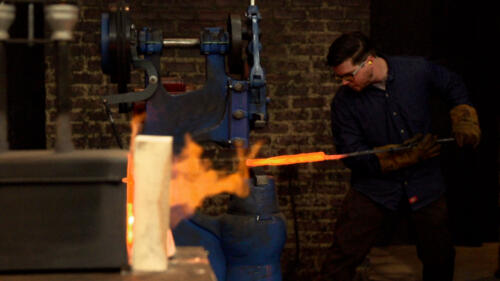
A power hammer is a belt-driven mechanical trip hammer that’s operated with a foot pedal, leaving both hands free to manipulate the steel.
Get an overview of the various types of steel used to make knives in this web exclusive from "The Elizabethan Rapier."
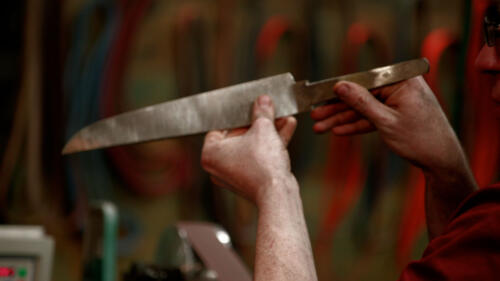
Learn about differing styles of blades and their uses in this web exclusive from "The Elizabethan Rapier."
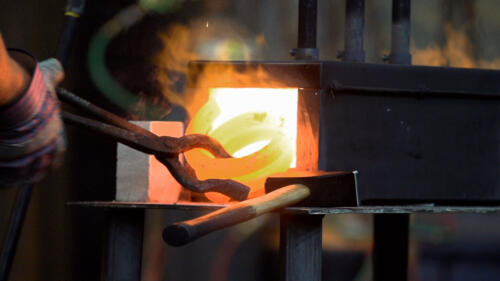
A forge is a large furnace or oven used to heat the steel up to temperatures high enough to make it malleable.
Forge welding is the process of fusing two separate pieces of metal using only heat and pressure—no filler.
A hydraulic press is a device used to generate a compressive force to aid in lengthening the heated metal.
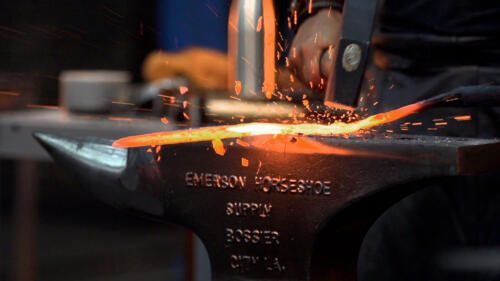
The face of an anvil is the part most often used for working and shaping steel, while the horn is used for bending or drawing the steel out.
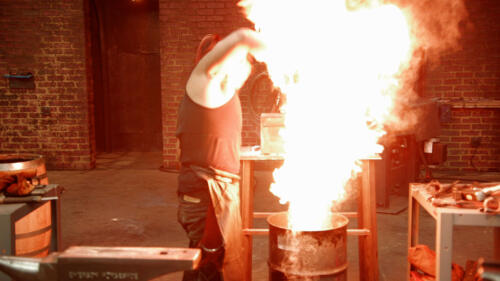
A cooling medium (water or oil) is needed to harden a fresh blade, but the quench can lead to deadly fireballs if it's handled incorrectly.
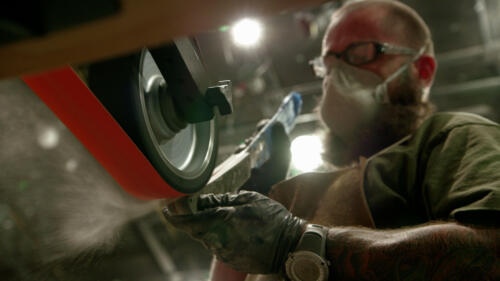
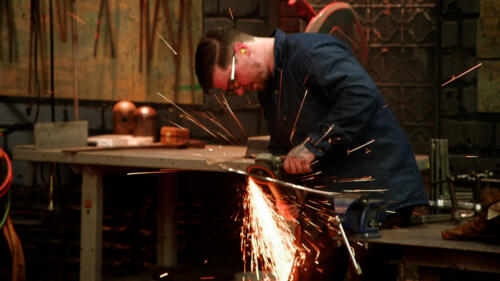
Grinding helps to fine-tune a blade's edge. Take a look at how the grind fits into the bladesmithing process.
Learn more about the types of materials used to make blade handles in this web exclusive from "Katar."
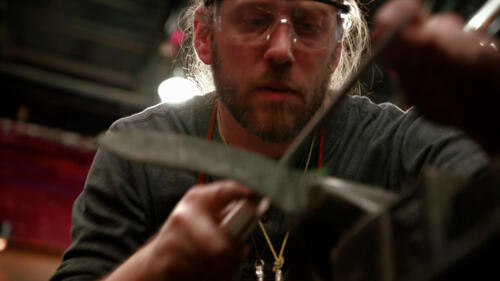
It’s the final part of the fit and finishing process, and as with all the elements of the forging process, there is an art to it.
Discover the history of the bowie knife in this web exclusive from "Katar."