Landmarks
Landmarks include spectacular monuments such as the Eiffel Tower, Mount Rushmore, the Panama Canal and the Brooklyn Bridge. They can also include awe-inspiring natural structures including Mount Everest, the Grand Canyon and Niagara Falls.

Start Here

A gold prospector dubbed the peak Mount McKinley in 1896, but Alaskans have historically championed Denali, a name rooted in its Native American history.

After her husband was incapacitated in an accident, Emily Warren Roebling took over supervising the complex construction of the landmark.

These remarkable feats of design and construction transformed the ways people travel, communicate and live.

A little-known chamber concealed behind the head of Abraham Lincoln was intended to contain a shrine to America.
Featured Video
How Yosemite’s Half Dome Became the Most Iconic Rock in America
Discover how Yosemite’s Half Dome rose from a massive granite formation to one of the most recognizable natural landmarks in the United States.

3 Iconic New York City Buildings


Explore All Related Topics

Barrel plunges, tightrope walks and jet skis—Niagara Falls has seen a plethora of daring stunts.

A grieving widow and mother oversaw construction of the maze-like Victorian-era mansion.

Here are eight spots that carry the legacy of the master of Gothic horror.

These six major events in the nation’s capital brought diverse groups of Americans together in the name of change.

You don’t have to cross an ocean to see famous landmarks like the Eiffel Tower and Stonehenge.

The Mariana Trench remained undiscovered until a crew from the HMS Challenger unsuspectingly lowered a weighted rope into its immense depths.

In 1852 the British-sponsored Great Trigonometrical Survey, which had been mapping the Indian subcontinent since the early 1800s, identified the highest mountain in the world straddling Nepal and Tibet in the Himalayas. The British initially referred to the 29,035-foot-tall pinnacle as Peak XV until Andrew Waugh, the surveyor general of India, proposed that it be […]

From boots to sleeping bags, see how equipment that Edmund Hillary and Tenzing Norgay used in the first ascent of Mount Everest compares to what climbers use today.

Explore some surprising facts about the highest mountain in the world.

This New Jersey landmark was built before the nation was founded.

The exact location of the ancient, gnarled bristlecone pine is kept secret for its protection.

The Pantheon’s famous oculus might have functioned as a giant solar calendar.

More people flock to the Great Smoky Mountains than any other national park.
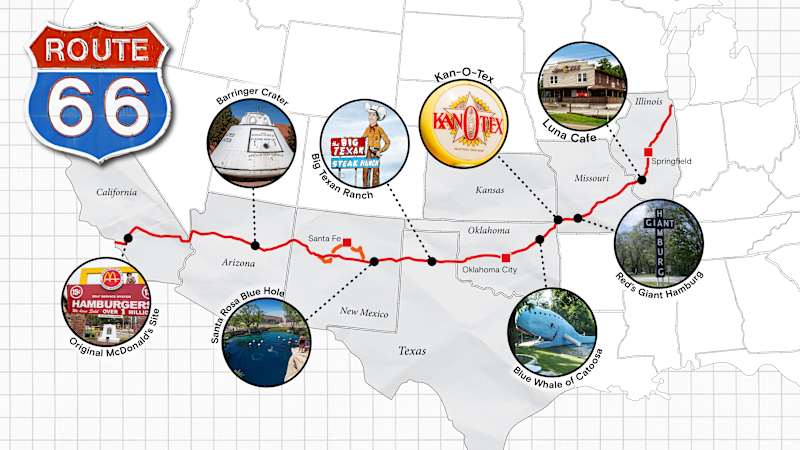
Route 66 attractions, like the Kan-O-Tex Service Station and the first McDonald’s site, preserve the famous highway’s past.

The Washington, D.C., performing arts center has been one of the United States’ preeminent cultural institutions since the 1970s.

The dramatic interlocking stone walls at Machu Picchu have proven to be highly earthquake-resistant.


